


Introduction
Imagine pulling café-quality espresso in your own kitchen every morning—without the $5 café premium, without the commute, and without the disappointment of inconsistent quality.
For millions of home coffee enthusiasts across the US, Canada, UK, and Australia, this dream has become achievable. However, the espresso machine market remains overwhelming. With countless models ranging from $150 to $3,000+, choosing the right machine feels paralyzing.
The problem is real: Most buyers either overspend on features they’ll never use or purchase budget machines that deliver weak, watery shots. The middle ground—genuine quality at realistic prices—is hard to find.
The vision is simple: Every budget level deserves a machine that delivers authentic espresso results. Whether you have $300 or $1,500, you can brew exceptional coffee at home.
This guide cuts through the noise. We’ve researched 5 espresso machines currently available on Amazon (verified December 2025) that actually deliver results at their price points. No outdated models, no machines that are impossible to find. Just honest reviews of machines you can buy today.
Table of Contents
Best Overall: Breville Barista Express ($550–$750)

The Problem It Solves
New espresso drinkers face a brutal reality: you need both a grinder AND a machine—essentially two purchases, two learning curves, and significant complexity. Most beginners feel lost before they even start.
The Breville Barista Express eliminates this paralysis by combining both into one thoughtfully designed system.
What Makes It Stand Out
The Barista Express is the world’s #1 best-selling home espresso machine for one reason: it simplifies the entire process without sacrificing quality.
Key Components:
- Built-in conical burr grinder (adjustable, real-time control)
- 54mm stainless steel portafilter (professional-sized basket)
- Thermoblock heating system (8–10 second heat-up)
- Pre-infusion (low-pressure start, then high-pressure extraction)
- 9-bar extraction pressure (café standard)
- Single + double wall filter baskets (versatile)
- Manual steam wand (3.5″ length, good microfoam control)
- Programmable single/double shot buttons
The Integrated Grinder Advantage
Unlike machines that require buying a separate grinder ($300–$500 additional), the Barista Express includes everything. This means:
- One machine to learn, not two
- No separate grinder purchase required to start
- Adjust grind size directly on the machine without external tools
- Consistent results from day one (if used correctly)
Important note: The built-in grinder produces good (not exceptional) espresso. If you later want to upgrade to premium results, you can buy a separate grinder and use the machine’s portafilter with an external burr grinder.
Real-World Example
David, a first-time espresso buyer in Seattle, was intimidated by the grinder selection process. The Barista Express changed his approach. Within two weeks, he understood how grind size affects shot time. By week three, he was pulling consistent, tasty shots and experimenting with different coffee beans. The integrated system removed the paralysis—he could focus on learning espresso, not shopping for equipment.
Specifications & Pricing
Breville Barista Express
| Feature | Details |
|---|---|
| Price | $550–$750 (varies by retailer) |
| Portafilter Size | 54mm |
| Boiler | Thermoblock (compact, quick heat) |
| Pressure | 9-bar |
| Heat-up Time | 8–10 minutes |
| Water Tank | 67 oz (2L) |
| Grind Settings | 25+ adjustable levels |
| Footprint | 13.5″ W × 13.9″ D × 15.98″ H |
| Current Amazon Price | $549.95 (base price, sales occur regularly) |
Pros & Cons
Breville Barista Express
Best Budget-Friendly: Gaggia Classic Pro ($250–$450)
The Problem It Solves
You want quality espresso but have a limited budget. Most budget machines ($150–$250) are weak, plasticky, and produce disappointing shots. The Gaggia Classic Pro breaks that pattern.
What Makes It Stand Out
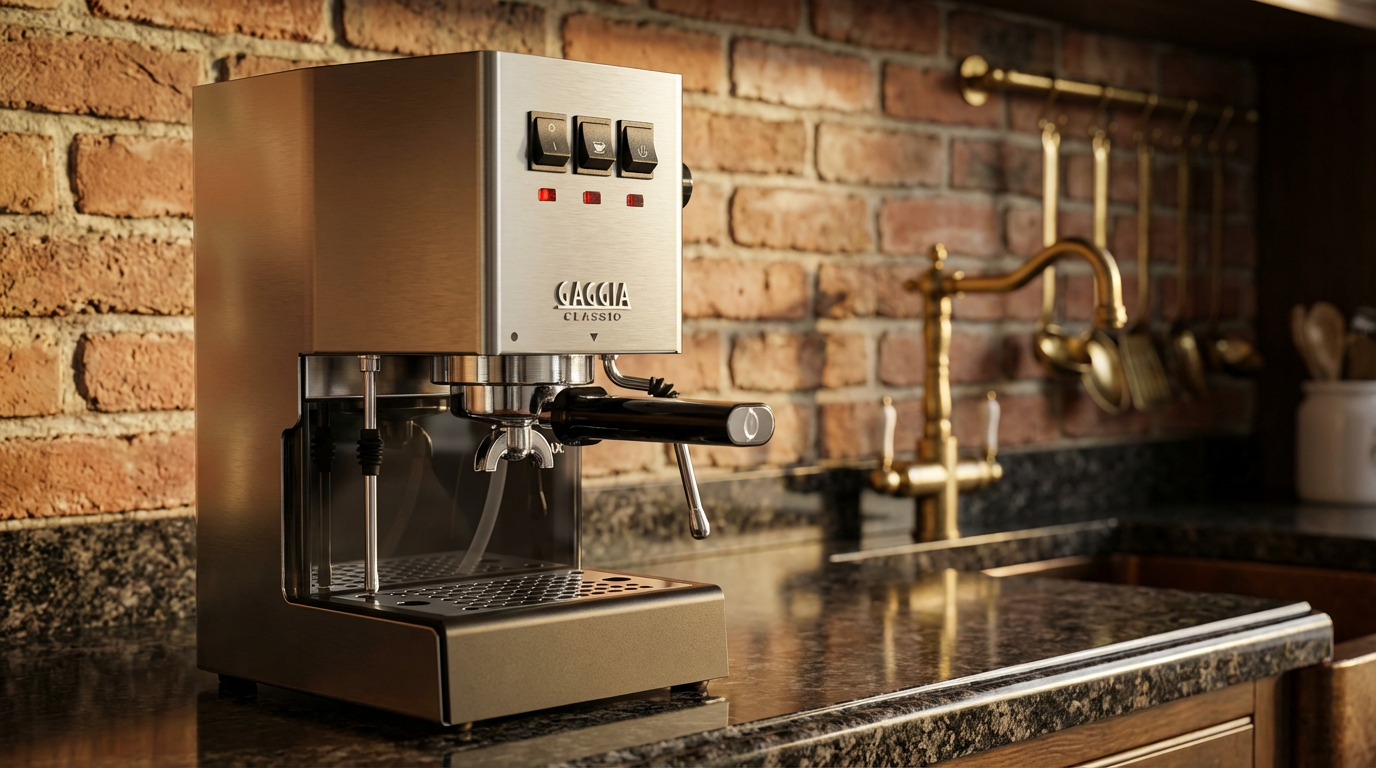
The Gaggia Classic Pro is the cult classic of home espresso, used by enthusiasts globally. Despite its modest $250–$450 price point, it features professional-grade components typically found in machines costing 3–4x more.
Professional Components:
- 58mm portafilter (professional standard, same as commercial machines)
- Brass boiler (superior heat retention, thermal mass)
- Three-way solenoid valve (clean, dry pucks every time)
- Professional commercial steam wand (creates excellent microfoam)
- Manual temperature control (temperature surfing for advanced users)
- Commercial OPV (overpressure valve) (consistent 9-bar pressure)
The 58mm Portafilter Advantage
This is the game-changer. A 58mm portafilter means:
- Professional standard size (same baskets as commercial espresso bars)
- Massive aftermarket ecosystem (thousands of accessories available)
- Endless upgrade potential (PID controllers, rotary pumps, group head upgrades)
- Long-term value (won’t outgrow this machine easily)
Real-World Example
James, a tech enthusiast in Sydney, bought the Gaggia Classic Pro at age 32. He spent his first month learning “temperature surfing” (a manual technique for maintaining optimal brewing temperature). By month two, he was pulling shots rivaling his local café. At just $299–$349 initially, he later invested $250 into a PID temperature controller (an upgrade), bringing his total to ~$600 for prosumer-level capability—far cheaper than buying a $1,500 machine outright.
Specifications & Pricing
Gaggia Classic Pro
| Feature | Details |
|---|---|
| Price | $250–$450 (varies by color/seller) |
| Portafilter Size | 58mm (professional standard) |
| Boiler | Brass (excellent thermal mass) |
| Pressure | 9-bar OPV |
| Heat-up Time | 10–15 minutes |
| Water Tank | 1L (~34 oz) |
| Footprint | Compact (fits standard counters) |
| Upgrade Potential | Extremely high (community mod-friendly) |
| Amazon Availability | Generally in stock |
Pros & Cons
Gaggia Classic Pro
The Upgrade Path Reality
The Gaggia ecosystem is unique. You can:
- Start with Gaggia + basic grinder ($400–$500 total)
- Add PID controller later ($150–$300)
- Upgrade to rotary pump ($200–$400)
- Replace steam wand ($50–$150)
Without replacing the machine. This modularity appeals to long-term enthusiasts and tinkerers.
Best Speed & Convenience: Breville Bambino Plus ($399–$499)
The Problem It Solves
You want espresso fast. Traditional machines require 15–30 minutes of pre-heating. Families with busy schedules don’t have that time. The Breville Bambino Plus solves this with a revolutionary heating system.
What Makes It Stand Out
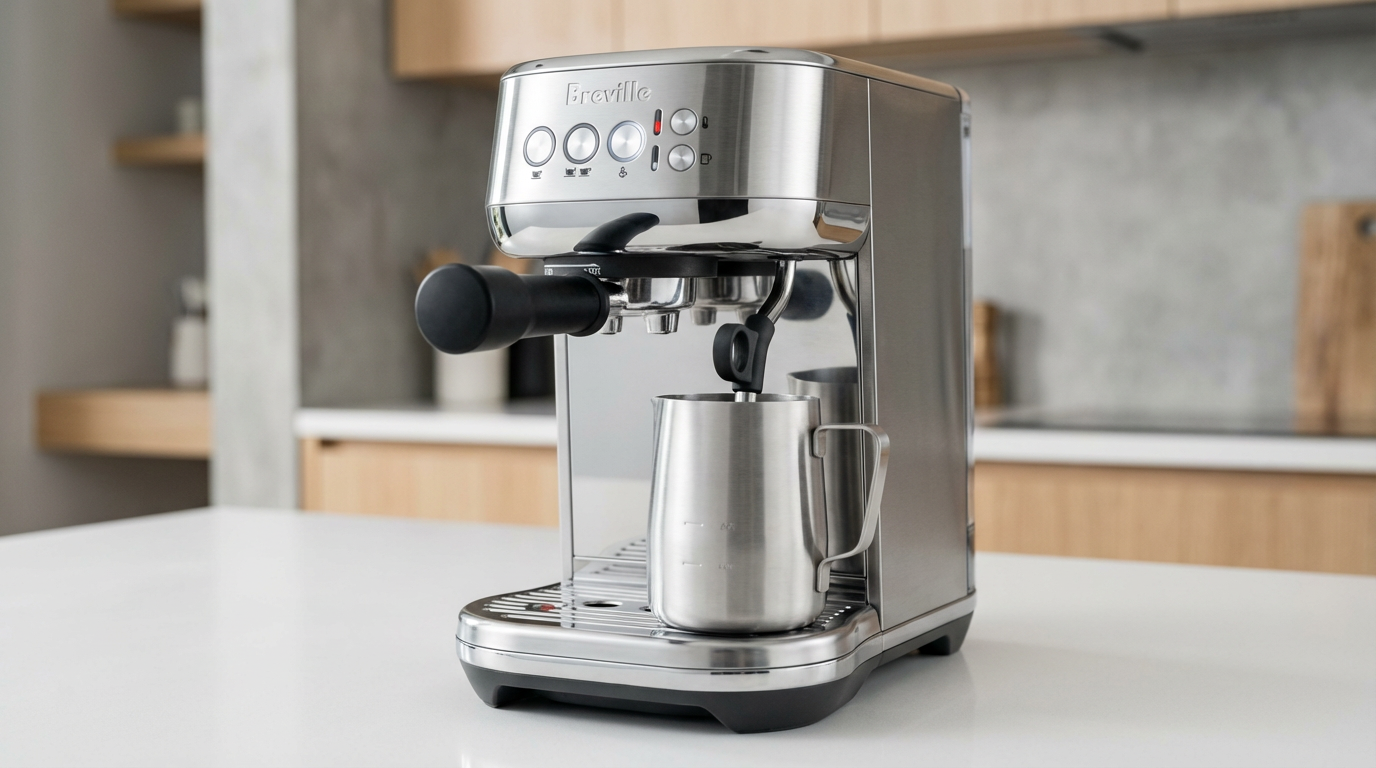
The ThermoJet heating system reaches brewing temperature in just 3 seconds—the fastest in any home espresso machine. Combined with compact design and user-friendly features, it’s perfect for people who prioritize speed and simplicity.
Key Features:
- ThermoJet heating system (3-second heat-up)
- PID digital temperature control (±1°C precision)
- 54mm stainless steel portafilter
- Dual-wall + single-wall filter baskets
- Auto milk frothing system (button-activated foam)
- Manual steam wand (for purist control)
- Low-pressure pre-infusion (better extraction)
- Three-way solenoid valve
- 64 oz water tank
Speed vs. Traditional Machines
| Machine | Heat-up Time | Convenience |
|---|---|---|
| Breville Bambino Plus | 3 seconds | Fastest, push-button milk frothing |
| Breville Barista Express | 8–10 minutes | Still fast, all-in-one |
| Gaggia Classic Pro | 10–15 minutes | Slowest, manual operation |
Real-World Example
Sarah, a marketing manager in Toronto, was making instant espresso at her desk. After buying the Bambino Plus, she was pulling café-quality shots within 3 seconds of waking up. The auto-frothing feature means she never overthinks milk steaming—it’s consistent, repeatable, and reliable. Within two weeks, she was hosting espresso tastings at home.
Specifications & Pricing
Breville Bambino Plus
| Feature | Details |
|---|---|
| Price | $399–$499 (November 2025 sale prices) |
| Heat-up Time | 3 seconds (fastest available) |
| Portafilter Size | 54mm |
| Boiler | Thermoblock |
| Pressure | 9-bar |
| Water Tank | 64 oz (1.9L) |
| Milk Frothing | Auto (3-4 second froth) + manual option |
| Footprint | 13.5″ W × 13″ D × 11″ H (compact) |
| Current Amazon Price | $399 (verified November 2025) |
Pros & Cons
Breville Bambino Plus
Who Should Buy It?
- People with limited time (morning rush, busy schedule)
- Apartment dwellers (compact footprint)
- Milk drink lovers (auto-frothing convenience)
- Anyone prioritizing ease over learning curve
Best for Serious Milk Drinks: De’Longhi Magnifica Evo ($750–$900)
The Problem It Solves
If you make 5+ milk-based espresso drinks daily (cappuccinos, lattes, flat whites), single-boiler machines create workflow delays. You pull espresso, wait for temperature recovery, then steam milk. The De’Longhi Magnifica Evo streamlines this with advanced automation.
What Makes It Stand Out
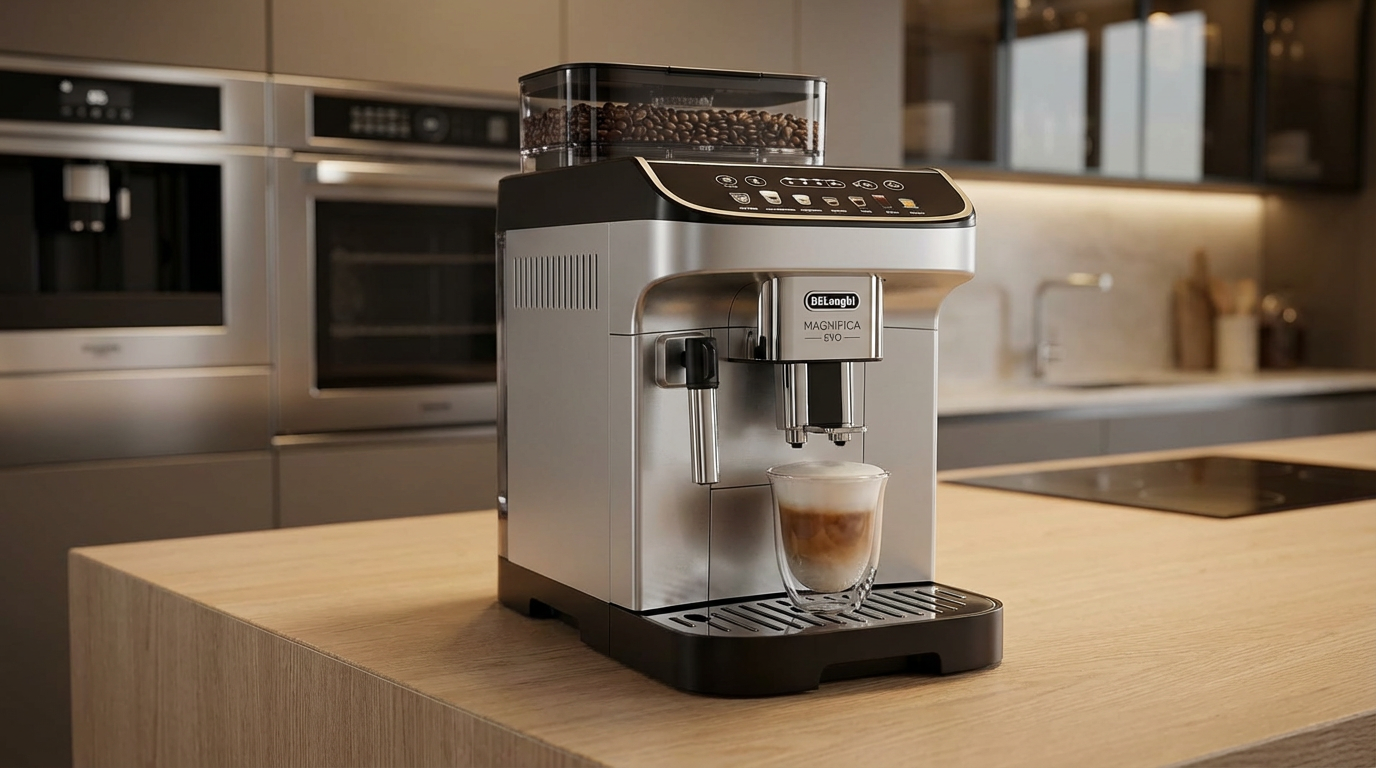
The De’Longhi Magnifica Evo is a fully automatic espresso machine with built-in grinder, meaning it handles grinding, dosing, brewing, and milk frothing with one-touch buttons. This is ideal if you want minimal manual intervention and consistent results.
Key Features:
- Fully automatic operation (bean-to-cup)
- Built-in burr grinder (adjustable grind)
- Auto milk frother (LatteCrema system)
- 15-bar pump pressure
- Pre-heating system
- Multiple drink presets (espresso, long coffee, cappuccino, latte)
- Self-cleaning + auto-descaling
- 1.8L water reservoir
- Compact design (fits tight kitchens)
The Automation Trade-off
Pros of Automation:
- One-touch operation (ideal for mornings)
- Milk frothing is automatic (no learning curve)
- Built-in grinder (no separate purchase)
- Consistent results every time
Cons of Automation:
- Less control over extraction
- Espresso quality is good, not exceptional
- You learn less about how espresso works
- Maintenance more complex
Specifications & Pricing
De’Longhi Magnifica Evo
| Feature | Details |
|---|---|
| Price | $749.95–$899.95 |
| Type | Fully automatic |
| Boiler | Single boiler, 1.8L capacity |
| Pump Pressure | 15-bar |
| Milk System | Automatic LatteCrema frother |
| Grinder | Built-in burr grinder |
| Drink Presets | Multiple (espresso, cappuccino, latte, etc.) |
| Dimensions | 17.32″D × 9.45″W × 14.17″H |
| Amazon Price | $749.95 (current, September 2025) |
Pros & Cons
De’Longhi Magnifica Evo
Who Should Buy It?
- People who primarily drink lattes/cappuccinos
- Those who value convenience over control
- Busy professionals wanting one-touch operation
- Anyone without time to learn manual techniques
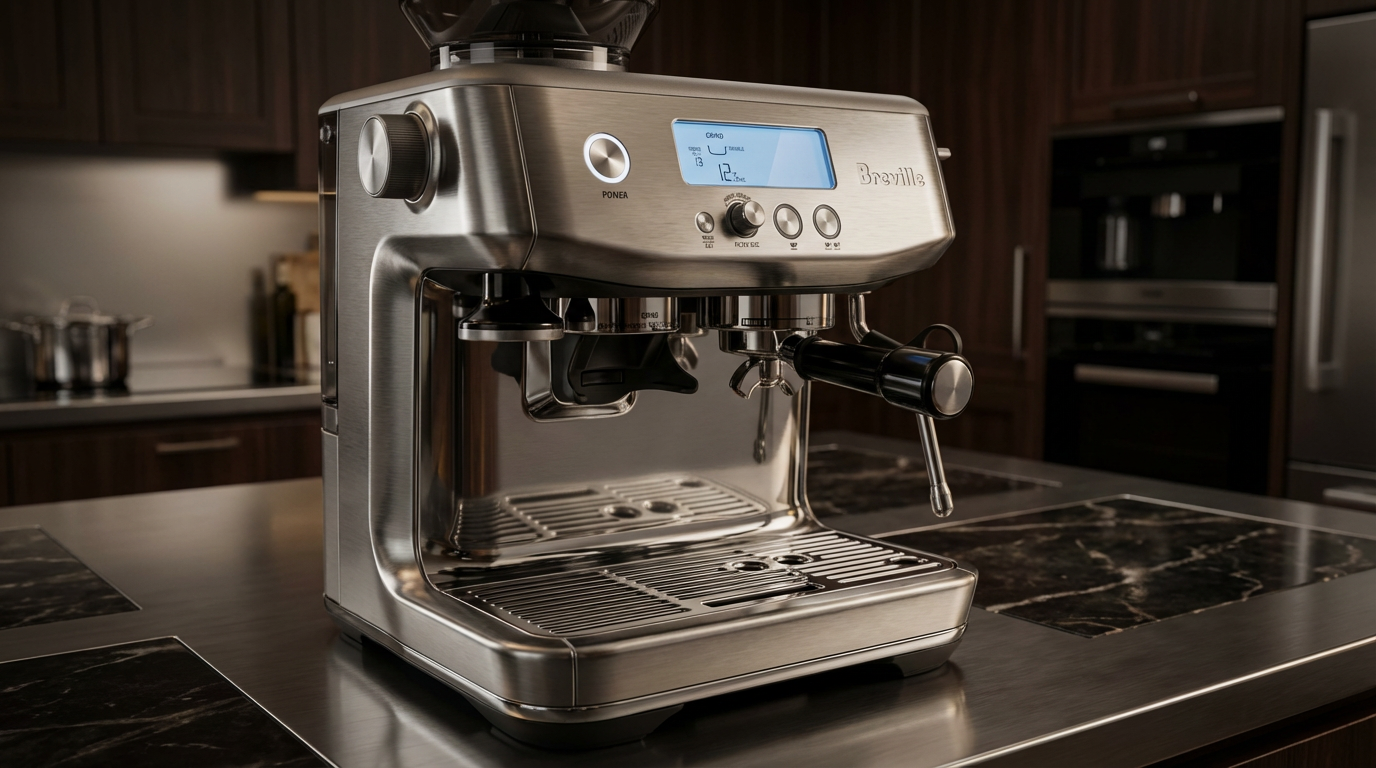
Best Premium & Workflow-Focused: Breville Barista Pro ($650–$850)
The Problem It Solves
The Barista Express is great for beginners, but advanced users want more control: 30 grind settings instead of 25, precise PID temperature display, faster heat-up, and a digital progress display. The Barista Pro bridges this gap.
What Makes It Stand Out
The Breville Barista Pro upgrades the Express with features that matter to intermediate enthusiasts without reaching prosumer prices ($1,200+).
Upgraded Features:
- ThermoJet heating (3-second heat-up, not 8–10 minutes)
- 30 grind settings (vs. 25 on Express)
- Digital PID temperature display (shows exact temperature)
- 9-bar extraction (professional pressure)
- Grind progress animation (shows grinding in real-time)
- Extraction progress animation (visual feedback during pulling)
- 54mm stainless steel portafilter
- Manual steam wand (professional-quality)
- Built-in grinder (no external purchase needed)
ThermoJet Advantage Over Thermoblock
| Heating System | Heat-up | Stability | Best For |
|---|---|---|---|
| ThermoJet (Barista Pro) | 3 seconds | Very good | Speed + control |
| Thermoblock (Barista Express) | 8–10 minutes | Good | Budget-conscious |
| Brass Boiler (Gaggia) | 10–15 minutes | Excellent | Pure espresso lovers |
Specifications & Pricing
Breville Barista Pro
| Feature | Details |
|---|---|
| Price | $849.95 (official Breville price) |
| Heat-up Time | 3 seconds |
| Grind Settings | 30 adjustable levels |
| Portafilter | 54mm stainless steel |
| Pressure | 9-bar |
| Display | Digital LCD with temperature + progress |
| Water Tank | 67 oz (2L) |
| Built-in Grinder | Yes (conical burr) |
| Amazon Availability | Verified in stock (discounts available) |
Pros & Cons
Breville Barista Pro
Best For
- Intermediate coffee enthusiasts (beyond beginner stage)
- People who value speed AND control
- Users making multiple shots daily
- Those who want more grind precision than Express offers
Espresso Machines: Budget Comparison
Side-by-Side Comparison of Top 5 Models
| Machine | Price | Grinder | Heat-up | Boiler Type | Best Feature |
|---|---|---|---|---|---|
| Gaggia Classic Pro | $250–$350 | ❌ Separate | 10–15 min | Brass | 58mm portafilter, modularity |
| Breville Bambino Plus | $399–$499 | ❌ Separate | 3 sec | Thermoblock | Speed, auto-froth |
| Breville Barista Express | $549–$750 | ✅ Built-in | 8–10 min | Thermoblock | All-in-one simplicity |
| Breville Barista Pro | $649–$850 | ✅ Built-in | 3 sec | ThermoJet | Speed + control + grind |
| De’Longhi Magnifica Evo | $749–$900 | ✅ Built-in | 5–10 min | Single | Automation, milk frother |
❌ Separate: Requires purchasing a separate grinder ($150–$500)
✅ Built-in: Grinder included in the machine
Heat-up: Time to reach brewing temperature from cold start
Best Feature: The standout characteristic that makes this machine unique in its price range
Real-World Buying Scenarios
Scenario 1: The Beginner (First espresso machine)
Profile: Emma, 28, London, first-time buyer
Budget: $600
Decision: Breville Barista Express ($549–$750)
Why: All-in-one eliminates grinder research paralysis. One machine to learn, not two. Thermoblock heat-up is acceptable for beginners.
Results: Within 3 weeks, Emma pulled her first respectable shots. By month two, she understood grind theory. No regrets.
Scenario 2: The Speed Enthusiast (No time for waiting)
Profile: Sarah, 35, Toronto, busy professional
Budget: $500 (willing to buy grinder separately)
Decision: Breville Bambino Plus ($399) + Baratza Encore Grinder ($100)
Why: 3-second heat-up fits morning routine. Auto-frothing removes milk steaming complexity. Compact design saves counter space.
Results: Espresso ready in 5 minutes from waking up. Auto-frothing never disappoints. Worth every penny for time savings.
Scenario 3: The Modular Enthusiast (Future-focused)
Profile: James, 40, Sydney, tinkerer personality
Budget: $400 now, willing to invest $800+ over 3 years
Decision: Gaggia Classic Pro ($299) + Baratza Sette 270 ($270)
Why: 58mm portafilter opens endless upgrade doors. Brass boiler = lifetime durability. Initial investment small, future potential huge. Can add PID controller ($250) in year 2, rotary pump in year 3.
Results: Year 1: Learning curve steep but rewarding. Year 2: PID added, shots improved dramatically. Year 3: Total investment $800 for prosumer-level machine.
Scenario 4: The Convenience-First Buyer (Milk drinks only)
Profile: Lisa, 42, Melbourne, makes lattes daily
Budget: $800
Decision: De’Longhi Magnifica Evo ($750–$900)
Why: Fully automatic handles grinding, frothing, and brewing. One-touch operation. LatteCrema system creates consistent microfoam. No learning curve. Perfect for milk-drink enthusiasts.
Results: Daily cappuccinos taste consistent. Auto-cleaning removes maintenance burden. Coffee shop visits dropped to zero.
Scenario 5: The Advanced Amateur (Upgrading from Barista Express)
Profile: Marcus, 35, Miami, owned Express for 2 years
Budget: $850
Decision: Breville Barista Pro ($849.95)
Why: 30 grind settings (Express has 25) provide precision for different beans. ThermoJet 3-second heat-up vs. Thermoblock 8–10 minute wait. Digital PID display shows exact temperature. Faster workflow for daily multi-shot use.
Results: Grind consistency improved dramatically. ThermoJet speed changed morning routine. Worth upgrading from Express after 2 years.
Total Cost of Ownership: Year 1
Complete Setup Breakdown for Each Espresso Path
| Gaggia Classic Pro | $299 | Budget-friendly |
| Baratza Encore Grinder | $99 | Entry-level burr |
| Basic accessories | $50 | Tamper, WDT tool |
| Year 1 Total | $448 | Lowest option |
| Breville Bambino Plus | $399 | Black Friday price |
| Baratza Sette 270 | $270 | Espresso-specific |
| Accessories (pitcher, WDT) | $50 | Milk pitcher essential |
| Year 1 Total | $719 | Speed-focused |
| Breville Barista Express | $550 | Current Amazon price |
| Optional grinder upgrade | $0 now | Future option |
| Accessories | $50 | Pitcher, tamper |
| Year 1 Total | $600 | All-in-one |
| Breville Barista Pro | $850 | ThermoJet heating |
| Grinder (built-in) | — | Integrated |
| Accessories (pitcher, scale) | $100 | Precision brewing |
| Year 1 Total | $950 | Speed + control |
Recommended Grinders
If Buying Separately (Essential for Best Results)
| Grinder | Price | Best For | Availability |
|---|---|---|---|
| Baratza Encore | $99–$139 | Budget-conscious learners | ✓ In Stock 🛒 Check on Amazon |
| Baratza Sette 270 | $249–$279 | Espresso-specific | ✓ In Stock 🛒 Check on Amazon |
| Eureka Mignon Notte | $299–$349 | Premium results, quiet | ⚠ May Vary 🛒 Check on Amazon |
| Breville Smart Grinder | $150–$200 | Budget + Breville matching | ✓ In Stock 🛒 Check on Amazon |
Ready to Start Your Home Espresso Journey?
Here’s your next step:
- Identify your priority from the 5 scenarios above (speed? budget? milk drinks?)
- Read the latest reviews before purchasing
- Budget for a grinder if buying a machine without one ($100–$300)
- Check current pricing — Black Friday/Cyber Monday sales are common
Final Verdict
Best Machine for Your Priority
| If You Prioritize | Best Choice | Runner-Up |
|---|---|---|
| Simplicity + All-in-one | ✓ Breville Barista Express $550 | Breville Bambino Plus $399 |
| Speed | ✓ Breville Bambino Plus $399 | Breville Barista Pro $850 |
| Budget | ✓ Gaggia Classic Pro $299 | Breville Bambino $249 |
| Control + Modularity | ✓ Gaggia + PID $500–$700 | Breville Barista Pro $850 |
| Convenience + Milk drinks | ✓ De’Longhi Magnifica Evo $800 | Breville Bambino Plus $399 |
| Intermediate enthusiast | ✓ Breville Barista Pro $850 | Gaggia + upgrades $600–$800 |
FAQ: Common Questions Answered
Everything You Need to Know About Espresso Machines
All-in-one (Barista Express): 2–3 weeks to get comfortable.
Manual (Gaggia): 4–8 weeks to master temperature surfing.
Speed machines (Bambino): 1 week for basic competency.
The investment in learning time pays off with better espresso within weeks.
If buying Gaggia or Bambino Plus: Yes—budget $100–$300 for a decent grinder.
A quality burr grinder is essential for espresso. Blade grinders produce inconsistent particle sizes that ruin extraction. Invest in a proper grinder—the difference is dramatic.
De’Longhi and Gaggia sales are less common but do occur.
Best strategy: Use CamelCamelCamel price tracker to watch prices and receive alerts when discounts happen. Many machines hit lowest prices during holiday sales.
Gaggia machines often reach 15–20 year lifespans (exceptional durability).
Breville machines typically last 5–7 years before component failures.
De’Longhi lifespans vary, but generally 5–8 years.
Regular descaling and cleaning extend lifespan significantly. Gaggia’s commercial components make it the longest-lasting budget option.
Commercial espresso: $3–5 per shot.
Annual savings: If you drink espresso daily, home brewing saves $1,000–$2,000 per year compared to café visits. A $600 machine pays for itself in 4–6 months of daily coffee drinking.
Discover our curated collection of expert-tested espresso machines and professional-grade grinders. Each review features real-world performance data, long-term durability assessments, and comprehensive comparisons to help you choose the perfect setup for your home café.
Disclaimer: This article contains affiliate links. Purchasing through our links supports our content at no extra cost to you. We only recommend products we trust.
Article updated: December 2025