



Table of Contents
Find the right Cappuccino Maker for your home without wading through jargon, so you can compare options quickly and confidently. This guide helps you compare espresso machines and choose a Cappuccino Maker that fits your counter space, budget, and taste. We highlight compact winners, barista-style setups, and fully automatic Cappuccino Maker models so you can find the best coffee routine for your mornings.
Expect clear notes on grinders, milk systems, and real-world time costs tailored to a Cappuccino Maker buyer’s checklist. We test built-in conical burr grinders (Breville), feature-rich fully automatic machines (Bosch and others), and entry-level ease from Mr. Coffee to show how each Cappuccino Maker choice affects crema, foam, and cleanup.
You’ll learn which machines pull the most consistent espresso and which save time with one-touch milk frothers for a seamless Cappuccino Maker workflow. We also point out where build quality matters—stainless accents, solid wands, and integrated grinders that influence flavor and the longevity of your home Cappuccino Maker setup.
Key Takeaways
- Compare grind quality, pump pressure, and milk systems to chase the best coffee flavor.
- Choose a fully automatic model for one-touch convenience or a barista-style semi-automatic for craft control.
- Consider size, warmup, and cleaning time if counter space or mornings are tight.
- Entry-level machines deliver strong value; premium units add durability and advanced features worth the price for daily use.
- Prioritize adjustable temperature and a reliable grinder when beans and latte texture matter most.
Why you can trust this cappuccino roundup for today’s deals
Hands-on tests were run in real kitchens to see how each Cappuccino Maker performs in everyday routines, not just lab conditions. Multiple-week evaluations included repeated runs on the Breville Barista Express and additional sessions with Bosch, Miele, Jura, De’Longhi, Mr. Coffee, Casabrews, Terra Kaffe, and GE to validate consistency and durability across different use cases.
What we measured across each Cappuccino Maker
- Warmup and brew time to reflect morning workflow speed for home users.
- Crema quality, aroma, and milk texture to assess espresso flavor and cappuccino foam performance.
- Cleanup steps and footprint to confirm fit on a typical countertop and daily maintenance effort.
How testing was structured for reliable Cappuccino Maker insights
Dozens of shots per model were pulled across light, medium, and dark roasts to show how grinders and dosing impact final flavor and crema. This included comparing built-in conical burr grinders, one-touch milk systems, and manual steam wands, so you can pick a Cappuccino Maker that matches your preferred balance of convenience, control, and cup quality.
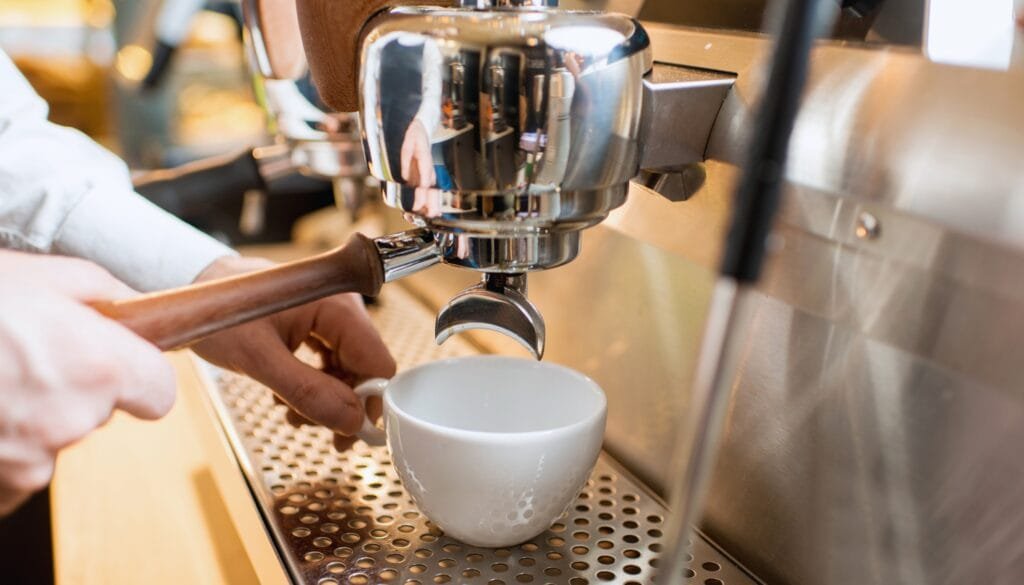
Our tasting rubric focuses on espresso body and flavor complexity, not marketing claims. We used freshly roasted coffee beans (stored and dosed consistently) to track grinder behavior, dose repeatability, and the real-world quality of each machine’s espresso.
- Side-by-side brew tests and sustained use confirmed which machines deliver repeatable espresso and which require more user tuning.
- We logged cleaning, descaling, and daily maintenance to show the ongoing time cost of different designs—especially for fully automatic units with integrated milk systems.
“Every machine here earned a spot because it proved consistent in repeated home use.”
See the picks below—each profile links back to the same testing rubric so you can match results to your routine.
Today’s Best Overall Picks For a Cappuccino Maker
We picked four machines that cover hands-on learning, one-touch convenience, value, and compact design. Below are short profiles and quick “best for” notes to help you match a model to your routine, counter space, and price range.
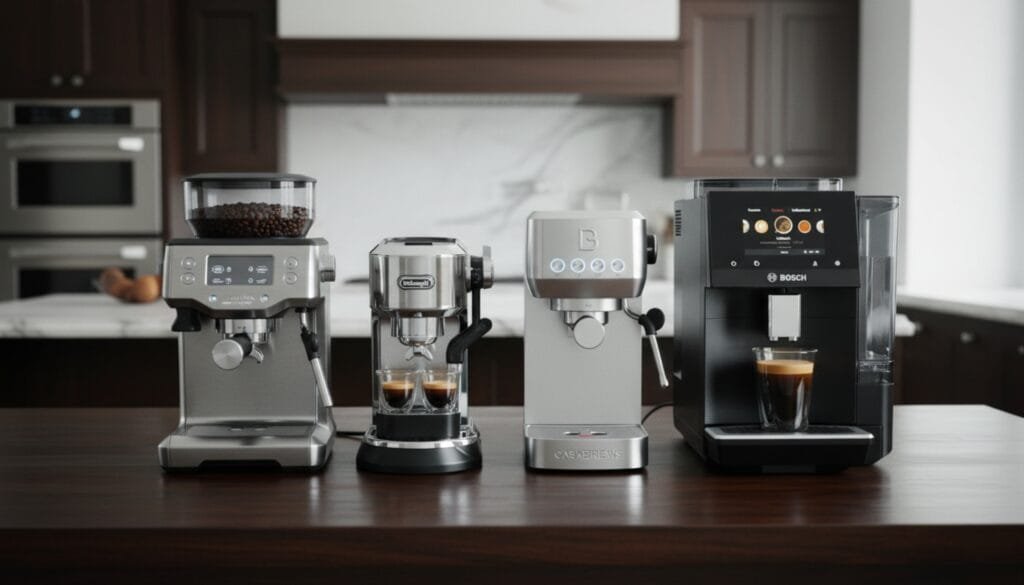
Best overall: Breville Barista Express Cappuccino Maker
Why you might choose it: The Breville Barista Express pairs a built-in conical burr grinder with semi-automatic controls, offering automatic dosing plus manual override for a learning-friendly Cappuccino Maker experience. It’s ideal if you want to build espresso technique while still getting consistent shots and silky microfoam once the steam wand is dialed in for cappuccinos.
Best for: hobbyists and learners who want great espresso, latte art potential, and a versatile Cappuccino Maker workflow. Typical price: midrange (watch sales for the best coffee value).
Best high-end: Bosch 800 Series Cappuccino Maker
Why you might choose it: A fully automatic Cappuccino Maker that emphasizes one-touch convenience, quiet operation, and broad drink options for repeatable cappuccinos and lattes. It handles grinding and milk automatically for speed and consistency when mornings are busy.
Best for: busy households and anyone who wants consistent, café-style drinks at the push of a button from a premium Cappuccino Maker. Typical price: premium tier.
Editor’s value choice: De’Longhi Dedica Maestro Plus Cappuccino Maker
Why you might choose it: Fast heat-up, three temperature settings, and a flexible steam wand with manual and automatic modes make this a compact Cappuccino Maker that’s beginner-friendly. It’s reliable for daily morning drinks without taking much counter space.
Best for: commuters and small households who want quality from a compact Cappuccino Maker. Typical price: budget-to-midrange.
Deal-friendly favorite: Casabrews 3700 Essential Cappuccino Maker
Why you might choose it: Slim 6.5‑inch footprint and a straightforward four-button interface make this a natural fit for tight counters. It pulls strong shots with simpler crema and uses a basic steam wand for workable foam—great value for the price.
Best for: renters and students who need a compact cappuccino maker that won’t dominate their kitchen. Typical price: entry-level bargain.
| ModelTypeKey milk featureStandout strength | |||
| Breville Barista Express | Semi-automatic espresso machine | Manual steam wand (silky microfoam) | Integrated conical burr grinder; craft learning |
| Bosch 800 Series | Fully automatic | Automatic milk frothing/carafe | Wide drink options; one-touch consistency |
| De’Longhi Dedica Maestro Plus | Semi-auto with auto mode | Versatile wand, manual/auto | Fast warmup; compact footprint |
| Casabrews 3700 Essential | Compact semi-automatic | Simple wand; straightforward froth | Slim footprint; great value |
“Pick a machine based on how much you want to drive the process versus how much you want the machine to handle.”
Top fully automatic Cappuccino Maker picks for one-touch cappuccinos
Choose a fully automatic Cappuccino Maker when you want repeatable, one-touch cappuccinos with minimal daily effort; superautomatic designs pair grinders and milk systems so grinding, dosing, and frothing happen with a tap—ideal if you value speed and consistency over manual craft.
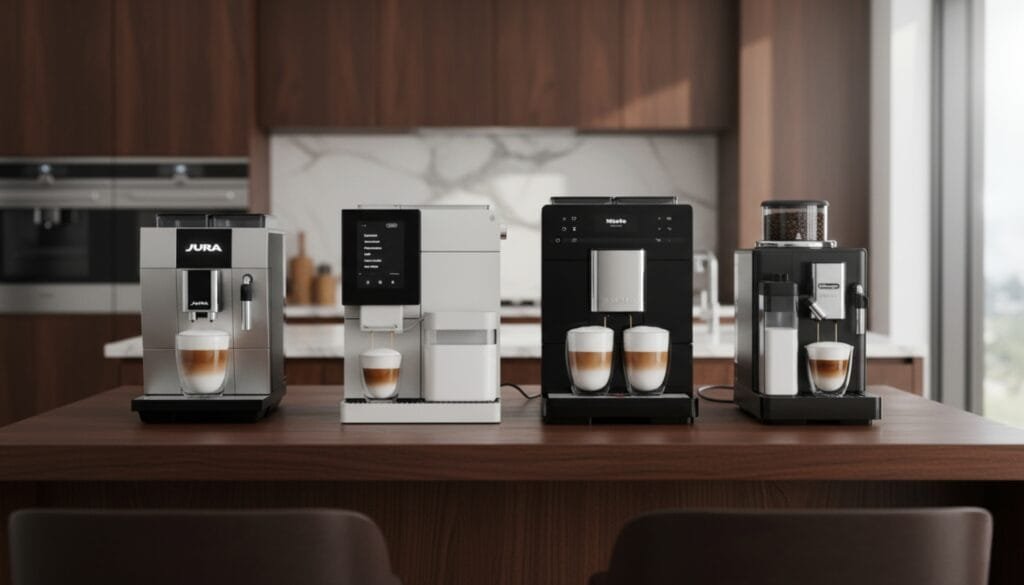
De’Longhi Rivelia — profiles & easy milk
Profiles and ease: The Rivelia stores user profiles on a responsive touchscreen so each household member can recall a favorite Cappuccino Maker recipe quickly, while its LatteCrema-style system switches between frothier cappuccino and denser latte textures at a tap.
Notes: Swappable hoppers make switching beans simple; expect roughly a day’s worth of drinks between refills depending on cup size, and confirm the exact drink count for the SKU you’re considering to match your Cappuccino Maker usage.
Miele CM5310 Silence — quiet, two-drink convenience
Quiet performance: Miele’s superautomatic emphasizes low noise and an integrated burr grinder tuned for consistent extraction, and it can prepare two specialty drinks back-to-back with auto-rinse cycles to reduce Cappuccino Maker cleanup.
Notes: Hopper capacity and waste-bin size determine how many cups you get before emptying, so check specs if you brew for a crowd with your Cappuccino Maker.
Terra Kaffe TK‑02 — app control and live milk dial
App control and live milk dial: The TK‑02 adds mobile controls for temperature, cup warming, and custom drink profiles, while a front-access water and waste layout simplifies daily Cappuccino Maker upkeep.
Notes: The milk dial gives live control from foamy to silky textures, and saved profiles keep family preferences handy for consistent Cappuccino Maker results.
Jura E6 — extraction-first convenience
Extraction and foam focus: Jura combines advanced extraction tech with a simple cappuccino menu so shots stay rich while workflow remains easy, and adjustable foam settings let you tune milk density without manual steaming on your Cappuccino Maker.
Notes: These machines typically grind for consistency rather than maximum crema intensity—great for milk-forward drinks.
- If you want one-touch convenience, superautomatics pair grinders with proven milk systems that make desirable texture easy to dial in.
- Consider hopper size, saved profiles, and cleaning rhythms—automatic milk carafes need regular rinses to stay hygienic.
“Superautomatics tend toward smooth, consistent shots—milk excellence often decides which model feels like the best fit.”
See the cleaning and maintenance section below for quick tips on keeping automatic milk systems fresh and reliable.
Semi-automatic standouts for hands-on home espresso
For at-home baristas, semi-automatic machines balance helpful automation with manual technique. You control grind, dose, and milk while relying on solid hardware to deliver consistent espresso—a great path if you want to learn craft but still get reliable morning drinks.
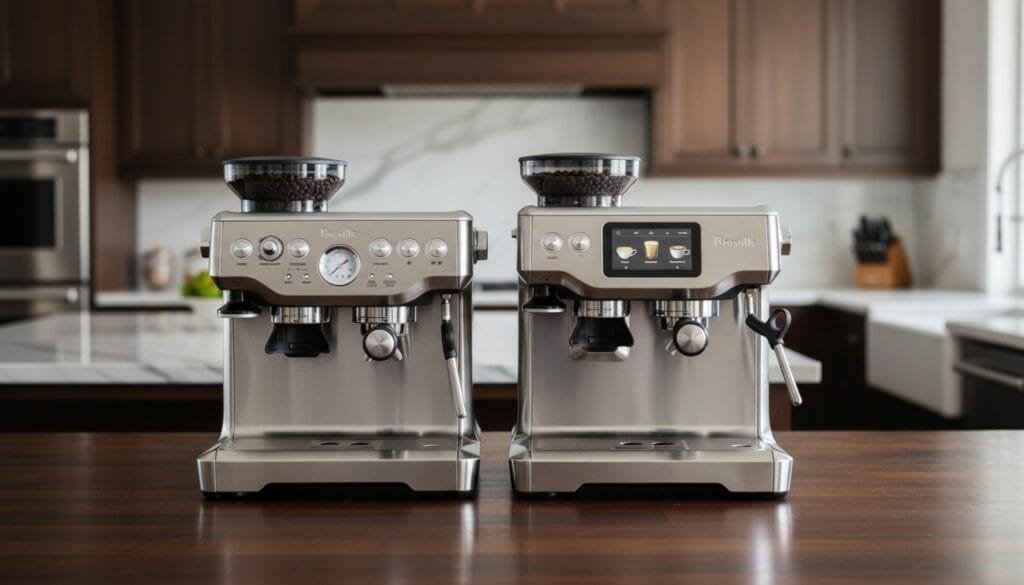
Breville Barista Express vs Breville Oracle Jet: Guidance vs Nuance
Breville Barista Express pairs a built-in conical burr grinder with manual and automatic dosing, so it teaches technique while simplifying steps. Expect consistent espresso once you dial in grind and dose; the steam wand rewards about 1–2 weeks of practice before you regularly produce silky microfoam.
Best for: learners and hobbyists who want a single machine that includes a quality grinder. Quick tip: if you already own a good standalone grinder, a semi-auto like this can deliver even better results.
Breville Oracle Jet adds touchscreen guidance and a PID for tighter temperature control, plus automatic assists that help capture nuanced shots. It’s aimed at enthusiasts who want precise, repeatable results with less manual guesswork.
Best for: users who want guided precision and expressive shots without fully giving up control.
De’Longhi Dedica Maestro Plus: fast heat-up, versatile steam wand
The De’Longhi Dedica Maestro Plus heats quickly (short warmup times), offers three temperature settings, and a flexible steam wand with both manual and auto modes. It’s compact and engineered for speed—useful when mornings demand a quick cappuccino.
Best for: commuters and small households who need solid espresso and quick froth from a small-footprint machine.
- Pick the Barista Express to learn grind and milk technique with a built-in conical burr grinder.
- Step up to the Oracle Jet for PID stability and guided precision if you chase nuance.
- Choose the Dedica when speed and space are priority and you want a reliable daily option.
| ModelGrinderMilkBest for | |||
| Breville Barista Express | Built-in conical burr | Manual steam wand (silky foam) | Learning craft; consistent espresso |
| Breville Oracle Jet | Integrated; guided dosing | Auto assist; manual option | Nuanced shots; PID stability |
| De’Longhi Dedica Maestro Plus | Compatible with external grinder | Manual/auto modes; louder wand | Fast heat-up; small footprint |
“Manual milk gives full control; automatic steaming adds repeatability for busy mornings.”
Budget-friendly cappuccino makers that punch above their price
You don’t have to spend much to enjoy espresso and reliable milk froth—these budget cappuccino makers deliver good daily drinks without breaking the bank.
Mr. Coffee Café Barista / One‑Touch CoffeeHouse automates shot pulling and milk frothing with one-touch latte and cappuccino presets. It’s beginner-friendly and fast to use, making it a solid daily driver for busy mornings. Expect a lighter espresso body than premium machines and plan for short rinse cycles to keep the frother and milk lines clean.
Casabrews CM 5418
Casabrews offers a surprisingly capable entry model for around $140 (typical retail). It uses thermoblock heating for quick warmups, includes a visible pressure gauge, and a pro-style steam wand that produces real foam when you practice technique.
- Why choose Mr. Coffee: push-button milk frother, minimal steps, great for fast mornings and casual users.
- Why choose Casabrews: pressure feedback and a sturdier feel—better if you want to practice wand technique and improve milk texture.
Note: Casabrews benefits from a separate grinder to get the best results from fresh coffee beans—pair it with an entry-level burr grinder for significant flavor gains. Both machines stretch your budget while giving dependable cappuccinos; choose the workflow you’ll actually use.
- Who it fits: students, renters, or anyone who values speed and low upfront price.
- Accessory tip: Add a small burr grinder (or use whole beans with a local grinder) to raise crema and body without upgrading the machine immediately.
- Next step: See the grinder and maintenance sections below for budget pairings and simple cleaning routines.
“If you want push-button milk and speed, pick Mr. Coffee; if you want to hone frothing, choose Casabrews.”
Compact picks for small kitchens and apartments
Small kitchens deserve big flavor—these compact espresso picks deliver café-style drinks without crowding your counter.
Casabrews 3700 Essential: 6.5-inch width with intuitive controls
Size and simplicity: The Casabrews 3700 fits tight counters with a 6.5-inch width and a four-button layout for single or double espresso. A built-in steam wand handles milk frothing so you can make cappuccinos without a lot of extra gear.
In long-term home testing the 3700 performed consistently; crema is lighter than high-end machines, but the unit offers dependable cups for small spaces and budgets.
GE Cafe Affetto: slim fully automatic with programmable drinks
One-touch convenience: The GE Cafe Affetto is a slim, fully automatic option with a compact footprint and a built-in steaming wand. Program a favorite drink for quick mornings and get repeatable frothed milk for dairy and many alternative milks.
Expect to empty spent grounds and refill the water tank regularly—front or side access to the water tank makes that maintenance less of a chore.
- Space checklist: measure width, height for bean hoppers, and confirm tank access (top vs. front) before you buy.
- Bean & grind tip: choose medium-dark roasted whole coffee beans and a slightly finer grind than on superautomatics to help compact machines improve crema and body.
- Speed vs. hands-on: choose a compact fully automatic like the Affetto for near-zero setup; pick the Casabrews 3700 if you want to practice wand control and tweak milk texture.
“Compact machines reward careful bean choice and grind—small improvements here pay off in a bigger-tasting cup at home.”
Pod and hybrid options for quick milk drinks
If quick, reliable milk drinks are your priority, pod and hybrid systems give you a fast path to café-style cups with minimal setup and cleanup.
Keurig K‑Café: an easy route to espresso-style drinks and great milk
The K‑Café produces a 2-ounce “espresso-style” shot without the high pump pressure of a true espresso machine, then pairs that base with a built-in frother to deliver consistent foam.
- Fast routine: This coffee maker creates an espresso-style base from pods and froths milk at one touch, saving time on busy mornings.
- Frother settings: Cold foam, latte, and cappuccino modes give you reliable frothed milk without wand practice.
- Real value: Pods reduce mess and simplify cleanup, so milk parts stay fresher and more hygienic with less effort.
- Versatile: Some users even use the K‑Café frother to prep frothed milk for shots pulled on a separate semi-auto machine.
- Note: Expect a lighter espresso flavor and less crema than a true pump-driven espresso shot—pod systems trade nuance for convenience and speed.
Pros / Cons
- Pros: Speed, low maintenance, great milk texture, excellent for guests or office use.
- Cons: Not true espresso (lower pressure), less flavor complexity and crema than machines with a conical burr grinder.
“A great entry point if you want reliable foam and minimal fuss at home.”
Milk frother and steam wand guide: getting that cappuccino foam right
Mastering milk texture is the quickest way to lift your espresso drinks from good to great. Choose an automatic milk system for repeatable results or learn a simple wand routine to shape microfoam and pour latte art—the right approach depends on how much control and time you want to invest.
Automatic milk systems: LatteCrema and integrated carafes
Automatic carafes and LatteCrema-style systems deliver consistent frothed milk at the touch of a button. Brands like Bosch and De’Longhi automate milk handling and often let you select denser or silkier textures for cappuccinos and lattes.
Pros: fast, repeatable, and great for busy mornings. Cons: parts require regular rinses and weekly deep cleans to avoid off flavors and bacterial buildup.
Manual steam wands: microfoam, technique, and latte art potential
Manual wands on machines such as Breville and Casabrews reward a little practice with café-level microfoam. Focus on pitcher angle, tip position, and a two-step routine: stretch to introduce a little air, then texture to fold air into silky foam.
Quick steam-wand routine (3 steps)
- Start cold with full pitcher: submerge the tip just below the surface and open steam to stretch (introduce air) for ~3–6 seconds until the pitcher grows slightly in volume.
- Drop the tip deeper to texture: tilt the pitcher and create a whirlpool to fold air into the milk until the temperature reaches about 140–155°F.
- Finish and purge: wipe and purge the wand immediately, then tap and swirl the milk to eliminate large bubbles before pouring.
Tip: Aim for milk between 140–155°F—cooler keeps sweetness and foam stability; hotter milk flattens flavor and weakens foam.
Cold foam and alternative milks: texture tips for oat, soy, and dairy
Cold foam works great for iced drinks and is simple with a standalone frother or pod hybrid. Dairy foams most predictably, but modern barista-style oat and soy milks are formulated for steaming and can produce excellent frothed milk when handled correctly.
Best matches: oat — great for silky microfoam; soy — good density; almond — tends to be thinner and may need a stabilizer or blend designed for barista use.
Troubleshooting quick fixes
- If bubbles are large: reduce tip depth and increase texture time; swirl the pitcher more strongly to break bubbles.
- If foam is too dry: shorten the stretch phase and keep the tip deeper while texturing.
- If milk is too hot or scalded: aim lower on the thermometer and remove heat 5–10°F earlier next time.
Wand care: Purge, wipe, and rinse the wand immediately after each use. Dried milk clogs nozzles and degrades foam quality; automatic carafes should be rinsed after each use and given a weekly deep clean.
- If you want simplicity: automatic milk systems deliver consistent froth with minimal training.
- If you want control: manual wands give the best microfoam and latte art potential with short practice (about 1–2 weeks to build repeatability).
- Everyday rule: match the method to your routine—time-savers for busy mornings, wands for craft practice.
| SystemBest forBrands/examplesCare notes | |||
| Automatic carafe | Quick, consistent frothed milk | Bosch, De’Longhi LatteCrema | Rinse after each use; weekly deep clean |
| Manual wand | Microfoam, latte art | Breville, Casabrews, GE Cafe Affetto | Purge and wipe immediately; backflush per schedule |
| Standalone frother | Cold foam, iced drinks | Keurig K‑Café frother | Simple rinse; dry between uses |
| Hybrid systems | Mix of auto and manual control | Some De’Longhi and G.E. models | Regular carafe rinse and wand wipe |
“For daily convenience, automatic frothing wins; for maximum texture and art, the wand is the path to take.”
Grinders matter: conical burr grinder basics for better espresso
A grinder is the secret ingredient that shapes your espresso’s flavor before the shot even hits the cup. Particle size and consistency control extraction, crema, and aroma—so pairing the right grinder with your cappuccino maker changes the result more than almost any other component.
Built-in vs. standalone: convenience versus control
Built-in grinders—like the conical burr inside the Breville Barista Express—save counter space, simplify dosing, and reduce steps between beans and cup. Many fully automatic machines from Miele, Bosch, Jura, and Terra Kaffe use internal grinders tuned for reliable, repeatable shots across users.
Standalone burr grinders give you more grind steps, finer adjustment, and an easier upgrade path. If you chase the best espresso nuance and crema, a separate burr grinder lets you dial tiny changes in particle size to refine flow and flavor.
How to choose a grinder: quick checklist
- Grind steps: more steps = finer control for espresso dialing.
- Dosing accuracy: look for consistent grams-per-shot or timed dosing.
- Retention: low retention preserves freshness and reduces waste.
- Burr type: conical burrs are common in integrated systems and many standalone models for consistent grind and less heat buildup.
Recommended examples (by type)
Integrated example: Breville Barista Express — built-in conical burr, excellent for hands-on users who want a single-machine workflow. Standalone example: a midrange burr grinder (look for 30+ grind steps and low retention) will give better consistency and a clear upgrade path for espresso-focused drinkers.
Why fresh beans beat pre-ground for crema, aroma, and body
Freshly roasted beans, ground just before brewing, deliver the biggest uplift in cup quality. Pre-ground coffee loses volatile aromatics quickly and increases the risk of uneven extraction or channeling. Superautomatic machines often grind a touch coarser to avoid clogging and to favor reliability—this makes drinks smoother and more consistent with milk, but slightly less intense.
“The right grinder plus fresh beans can elevate even an affordable espresso machine to produce remarkably good cappuccino.”
| FeatureBuilt-in grinderStandalone grinder | ||
| Space | Compact; saves counter room | Takes extra space |
| Control | Fewer grind steps; preset dosing | Fine tuning; more grind settings |
| Upgrade path | Limited | Easy to replace or improve |
| Best for | Shared home use; convenience | Dial-in enthusiasts; quality focus |
- Tip: Clean your grinder regularly—oils and stale grounds muddy flavor over time.
- Buy beans roasted within 1–3 weeks and store them in a cool, dark spot; grind just before brewing for best results.
- Budget pairing: If your cappuccino maker lacks a built-in grinder, pair it with an entry-level burr grinder (look for conical burrs and 20+ grind steps) to dramatically improve espresso quality without a big price jump.
Key features to compare: water tank, drink options, stainless steel builds
Pick features you’ll actually use every day. Small design choices change how smooth your morning routine feels—focus on the handful of specs that affect refill frequency, cleaning, and the moments you touch the machine.
Water tank capacity and access
Check tank size and how you refill it—larger tanks with front or side access cut down trips to the sink. One-line decision: if you hate refilling, prioritize bigger tanks and removable front access.
Top-fill lids are convenient for quick refills, but under-cabinet clearance and a removable handle make daily use less awkward. Confirm tank placement and capacity (liters or ounces) before you buy—tall hoppers can force a minimum clearance of 14–16 inches above the counter on some machines.
Drink menus and customization depth
Compare drink options: broad menus (some Bosch variants advertise dozens of presets) give variety, while focused menus (Jura E6-style setups) prioritize espresso and cappuccino quality. One-line decision: if you want one-touch variety, choose a machine with many presets; if you want better espresso, choose focused controls and adjustable strength/temperature.
Choose meaningful controls for milk volume, foam density, strength, and temperature. Test a demo or read hands-on notes to see whether the milk frother/carafe is easy to clean and adjust—many “options” are useful only if you’ll actually use them regularly.
Build quality: stainless steel components and footprint
Stainless steel accents and a solid frame signal better durability and quieter extraction. One-line decision: if you plan heavy daily use, invest in sturdier materials to avoid rattles, discoloration, and early wear.
Also check footprint and hopper height—some integrated grinders add extra height that matters under cabinets. Balance build, features, and price so you end up with the options you’ll use every day rather than bells you’ll ignore.
“A balanced feature set makes it easier to keep making great espresso daily without friction.”
Cleaning and maintenance: keep milk frothers, wands, and brew paths fresh
Short, consistent cleaning prevents residue and preserves taste. A few minutes of daily care protects espresso flavor and saves you hours on deep cleans down the line.
Daily wipe-downs and quick wins
Purge and wipe the wand immediately after each steam, rinse the milk frother or carafe, discard used pucks, and rinse portafilters. Wipe spills and the group area to stop oils and milk from building up—these small steps preserve foam quality and keep shots tasting clean.
30‑second daily checklist:
- Purge & wipe steam wand.
- Rinse portafilter and knock out puck.
- Empty drip tray if needed and wipe surfaces.
Every few days: backflushing and tip checks
Backflush machines with an appropriate cleaner or just water (per your manual) every few days to remove coffee oils from the grouphead. Inspect steam tip holes and clear any buildup with a fine pin if flow is restricted—this fixes most texture problems quickly.
Periodic care: descaling and deeper washing
Descale every few months depending on your water hardness and use. Test your tap water (local utility or test strips) to set a descaling schedule—hard water needs more frequent treatment. Use the manufacturer-recommended descaler or tablets to protect boilers and pumps and follow the machine’s guided cycles.
- Empty & rinse drip trays and spent grounds containers weekly to avoid odors.
- Hand-wash milk parts weekly; check the manual to confirm dishwasher-safe components for your model.
- Keep a calendar or app reminder for backflushing, descaling, and filter changes so maintenance doesn’t slip.
Recommended descaling approach
Use the brand-recommended solution when possible. If not available, choose a citric-acid or manufacturer-approved descaler and follow dilution instructions precisely. Run a clear-water rinse cycle twice after descaling.
| TaskFrequencyWhy it matters | ||
| Purge & wipe wand | Daily | Prevents milk residue; preserves foam quality |
| Rinse portafilter & discard puck | Daily | Keeps espresso tasting clean; reduces oils |
| Backflush grouphead | Every few days | Clears oils and grounds; maintains extraction quality |
| Descale | Every few months (or per water hardness) | Protects boiler and pump; extends machine life |
Quick pro tip: If you see shorter steam times or inconsistent shots, a clogged brew path or mineral buildup is often the cause—do a targeted backflush and check the water tank for scale. Regular maintenance keeps your cappuccino maker delivering great espresso with less hassle.
How we test cappuccino makers for home use
Every machine is tested for real-world speed, consistency, and how intuitive its controls feel in daily use. Our process converts technical specs into practical results so you know what to expect each morning from your cappuccino maker.
Ease of use, brew time, and consistency across drink options
Setup and first-run: We time warmup and the full path from beans to cup. Typical warmup targets range from about 30 seconds (fast thermoblocks) to a few minutes (heat‑exchanger or dual‑boiler systems). For each machine we run dozens of shots during evaluation to confirm predictable shot times and menu clarity.
We log any friction points—sticky baskets, hard-to-access water tanks, or confusing menus—so you can see whether a machine will save or cost you time every day.
Espresso quality: body, crema, aroma, and flavor complexity
Shots are tasted across light, medium, and dark roasts using freshly roasted coffee beans. We score body, crema thickness, aromatic lift, and overall flavor balance to identify which machines make the best espresso and which favor milk-forward drinks.
Grinder and dose: Built-in and standalone grinders are tested for dose consistency and repeatability. When possible we measure grams per shot and note how grind adjustments affect extraction and crema.
Milk performance: froth density, temperature, and texture
Automatic milk systems and manual wands are evaluated for froth density, temperature accuracy, and mouthfeel. We test latte pours and classic cappuccino texture, noting how repeatable the milk result is across consecutive drinks.
- Measure water tank, drip tray, and footprint against manufacturer specs to confirm real-world fit.
- Run repeated cleaning cycles and multi-day use to spot durability or hygiene issues.
- Verify drink options and real-world value versus marketing claims—do presets produce the advertised drinks consistently?
DIY scorecard (use at home)
Try this quick checklist to test a machine yourself: 1) Warmup time (seconds/minutes), 2) Shot repeatability (pull 3 shots back-to-back), 3) Milk test (two consecutive cappuccinos from cold start), 4) Cleaning test (empty/replace tank and rinse carafe). Note results and compare to your routine.
“Our goal is to translate specs into daily satisfaction so you choose a machine that fits your habits.”
Want the downloadable test sheet? Use our scorecard above to shortlist 2–3 models and compare them side-by-side for the best home espresso fit.
How to shop today: pricing, promotions, and upgrade timing
Seasonal sales and bundles shape the true price you pay for an espresso setup. Watch major holiday events, retailer drops, and model refresh windows to catch meaningful discounts on models like the De’Longhi Rivelia and Breville Oracle Jet.
When to buy: Look for deals around Black Friday, Prime Day, end-of-year clearouts, and new-model launches. Bundles that include milk pitchers, descaling kits, or extended warranties often add more long-term value than a small upfront discount.
Trade-offs by price tier
Entry tiers (think Mr. Coffee One‑Touch CoffeeHouse) prioritize speed and push-button milk over extraction nuance—great for fast mornings but lighter on crema and flavor complexity. Mid-tier machines add better grinders, more durable builds, and adjustable milk settings for real flavor gains. High-end models layer automation, profiles, and quieter grinders—these save time and typically make a better drink with less effort, but cost significantly more.
- Save checklist: shop holidays and retailer events for lower price and bundled accessories.
- Refurb option: consider certified refurbished or manufacturer‑reconditioned units from trusted retailers to get higher-tier features at a lower price with warranty protection.
- Service & warranty: prioritize longer warranties and accessible service networks—these add real post-sale value for complex machines.
- Flavor-per-dollar tip: if you already own a quality grinder, a semi-automatic upgrade usually yields the biggest improvement in espresso quality per dollar spent.
| Price TierTypical perksWhat you trade | ||
| Entry | Low price, simple controls, included frother | Less depth of flavor; lighter crema |
| Mid | Better grinders, sturdier build, adjustable milk | Higher initial price; steeper learning curve |
| High | Profiles, app control, quiet grinders, advanced milk systems | Highest cost; may include features you won’t use |
“Plan your upgrade when your current routine feels like a chore—then new automation or control will truly pay off.”
Quick buying guideline: if your budget is under ~$200, prioritize simple, reliable machines like Mr. Coffee; for $200–$800, aim for mid-tier squids with built-in grinders or a good semi-auto; above $800, shop for advanced fully automatic or premium semi-automatic machines. Save your favorite models to a shortlist and compare specs, warranties, and included accessories before you buy.
Conclusion
Match a cappuccino maker to your kitchen, taste, and schedule so great coffee becomes an easy habit.
Breville Barista models reward hands-on craft with an integrated conical burr grinder, while fully automatic options such as the De’Longhi Rivelia, Jura E6, Miele CM5310, Terra Kaffe TK‑02, and Bosch 800 Series make mornings effortless by handling grinding, dosing, and milk frothing.
If you want speed and consistency, choose an automatic espresso machine that does the heavy lifting. If you enjoy dialing in flavor and foam, a semi-automatic espresso machine gives you the control to chase nuance and texture.
Budget buyers do well with Mr. Coffee or Casabrews and can improve results over time by upgrading coffee beans and adding a burr grinder. For tight counters, consider compact makers like the Casabrews 3700 Essential or GE Cafe Affetto for slim, capable performance.
Quick final checklist before you buy
- Must-haves: foam control, footprint that fits your counter, and a water tank you can refill easily.
- Decide: prioritize one-touch convenience (fully automatic) or hands-on control (semi-auto + grinder).
- Shortlist 2–3 models and use the test checklist in this guide to compare warmup, shot consistency, and milk performance.
Final tip: Use today’s deals and bundles to lock in value—compare warranties and included accessories so your new machine keeps making great espresso and milk-forward drinks for years.
FAQ
What’s the difference between a fully automatic espresso machine and a semi-automatic one ?
Quick answer: A fully automatic Cappuccino Maker handles grinding, dosing, brewing, and milk frothing at the touch of a button for consistent, one‑tap drinks; a semi‑automatic setup gives you control over dose, tamp, and extraction if you enjoy dialing in shots and mastering technique.
Do I need a conical burr grinder or is pre‑ground coffee fine ?
Quick answer: A conical burr grinder paired with your Cappuccino Maker yields better crema, aroma, and body thanks to consistent particle size; pre‑ground coffee trades freshness and even extraction for convenience.
How important is the milk frother or steam wand for cappuccino and latte quality ?
Quick answer: Very—the milk system can make or break café‑quality results on any Cappuccino Maker; automatic carafes are fast and repeatable, while manual steam wands deliver microfoam and latte art with practice.
Can I make good milk foam with plant‑based milks ?
Quick answer: Yes—oat and soy typically foam best on a Cappuccino Maker; barista‑style formulations improve stability and texture versus almond or low‑fat alternatives.
How often should I clean and descale my espresso machine ?
Quick answer: For a healthy Cappuccino Maker routine, do daily wand purges and wipe‑downs, backflush every few days per the manual, and descale every 2–3 months—adjust for local water hardness.
Are built‑in grinders better than standalone grinders ?
Quick answer: Built‑in conical burrs simplify a Cappuccino Maker workflow and save space; standalone burr grinders usually offer finer adjustments, lower retention, and easier upgrades for enthusiasts.
What water tank size should I look for ?
Quick answer: Match the Cappuccino Maker tank to usage—compact kitchens may be fine with 8–12 oz, while busy households benefit from 40 oz+ plus front/side access for quick refills.
How do price tiers affect machine features and trade‑offs ?
Quick answer: Entry‑level Cappuccino Maker options prioritize simplicity; mid‑tier adds stronger grinders and controls; high‑end brings user profiles, quieter grinders, and advanced milk systems—choose by the features you’ll use daily.
Which machines are best for small kitchens or apartments ?
Quick answer: Look for slim Cappuccino Maker models with easy‑access panels; compact picks like Casabrews 3700 Essential or GE Café Affetto variants balance narrow footprints with programmable drinks.
What should I consider when buying during sales or promotions ?
Quick answer: For a Cappuccino Maker deal, check bundles (pitcher, descaler), warranty length, return policy, and certified refurbished options to unlock premium features at lower prices with protection.
Can pod or hybrid machines deliver real espresso and frothed milk ?
Quick answer: Pod‑based Cappuccino Maker systems deliver fast espresso‑style shots and decent foam, but won’t match the crema and nuance of burr‑ground beans; great for convenience and guests.
How do you evaluate milk performance when testing machines ?
Quick answer: Score a Cappuccino Maker on froth density, temperature accuracy, texture consistency, and microfoam capability across dairy and plant milks while noting steam pressure and nozzle design.
Is stainless steel build quality worth the higher price ?
Quick answer: Often yes—stainless components on a Cappuccino Maker improve durability, heat retention, and long‑term appearance; worthwhile for heavy daily use and longevity.