


Affiliate Disclosure: Coffee Journals may earn a small commission on qualifying purchases made through links in this article, at no extra cost to you. Our recommendations are based on official manufacturer specifications, patterns observed across publicly available buyer feedback and community discussions, and use-case fit. We have not physically tested every machine featured here. Learn more about how we review products.
✦ Last Updated: May 2026
Looking for the best home espresso machine under $500? You’ve probably already noticed something strange after reading enough Reddit threads. You came in asking about machines. Veterans keep answering about grinders.
The single highest-voted comment in one recent 142-comment r/espresso thread on this exact topic was four words long: “Buy a good grinder first.” The second-highest reply was equally blunt: “You can have the nicest espresso machine and a trash grinder and have bad espresso.”
That answer surprises most beginners. The community isn’t dodging your question — it’s answering a deeper one most buyers don’t realize they’re asking.
This guide takes that consensus seriously. Instead of ranking the best home espresso machine under $500 in a vacuum, we mapped out the actual decision a $500 buyer faces — the one community veterans keep trying to communicate but new buyers keep missing.
The result is a different kind of comparison: not “which machine is best,” but “which combination solves the problem the community keeps warning you about.” If you’re spending real money on this, that distinction matters more than any spec sheet.
- The Hidden Consensus: Why Reddit Says “Grinder First”
- The Real Dilemma: All-in-One vs. Machine + Grinder
- Editor’s Top Pick: The Bambino Plus + ESP Combo
- 1. Breville Barista Express
- 2. Gaggia Classic Pro E24
- 3. De’Longhi ECP3420
- 4. Flair Classic Lever Maker
- 5. Baratza Encore ESP Grinder
- Final Comparison Table
- Frequently Asked Questions
Why “Grinder First” Is the Hidden Rule for the Best Home Espresso Machine Under $500
If you read enough espresso threads, the pattern becomes hard to ignore. A beginner asks about machines. Veterans answer about grinders.
To a newcomer, it sounds like the community is dodging the question. It isn’t — it’s answering a deeper one.
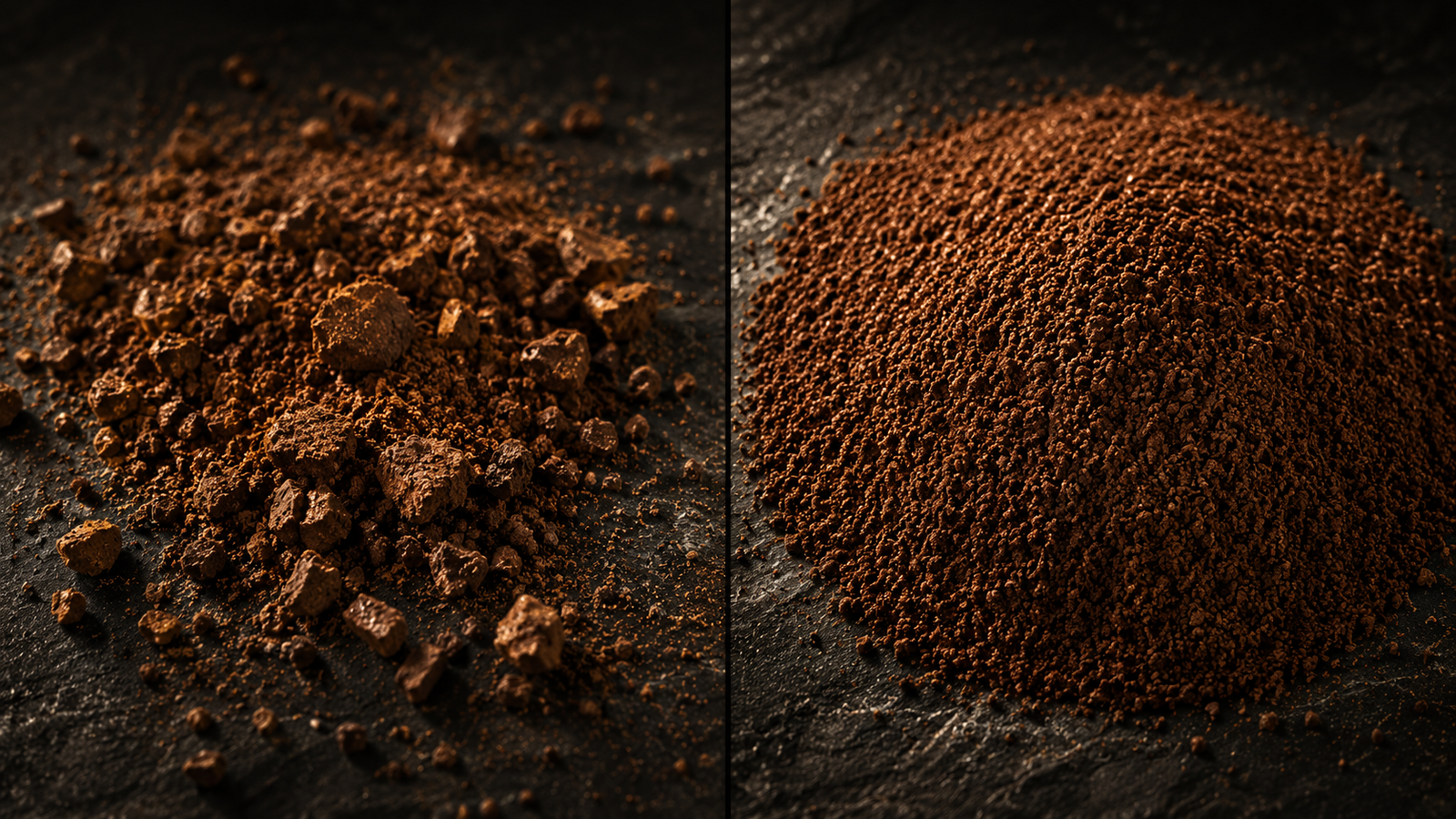
Here’s the physics underneath it: real espresso requires water to be forced through a tightly packed bed of coffee at roughly nine bars of pressure. That pressure can only build if every coffee particle is roughly the same size.
If your grind has even a small percentage of “fines” mixed with “boulders,” water finds the path of least resistance and channels straight through. The result is a sour, weak, watery shot — regardless of how expensive the machine pushing the water is.
One commenter in the discussion put it bluntly: “Without a grinder that can grind fine enough to build pressure on a non-pressurized filter, you cannot make a proper espresso.”
This is why the buyer hunting for the best home espresso machine under $500 who plans to spend the entire budget on a single unit almost always walks out disappointed. The numbers favor a different split.
A capable $300 machine paired with a capable $200 grinder consistently outperforms a $500 single unit. The single unit at that price almost always cuts the grinder corner. And the grinder is the corner that ruins everything else.
The implication for your $500 budget is uncomfortable but worth saying out loud: if you’re going to ignore one community recommendation in this guide, don’t make it this one.
The Real Dilemma: All-in-One vs. Machine + Grinder
Once you accept that the grinder isn’t optional, your $500 splits into two genuinely different roads.
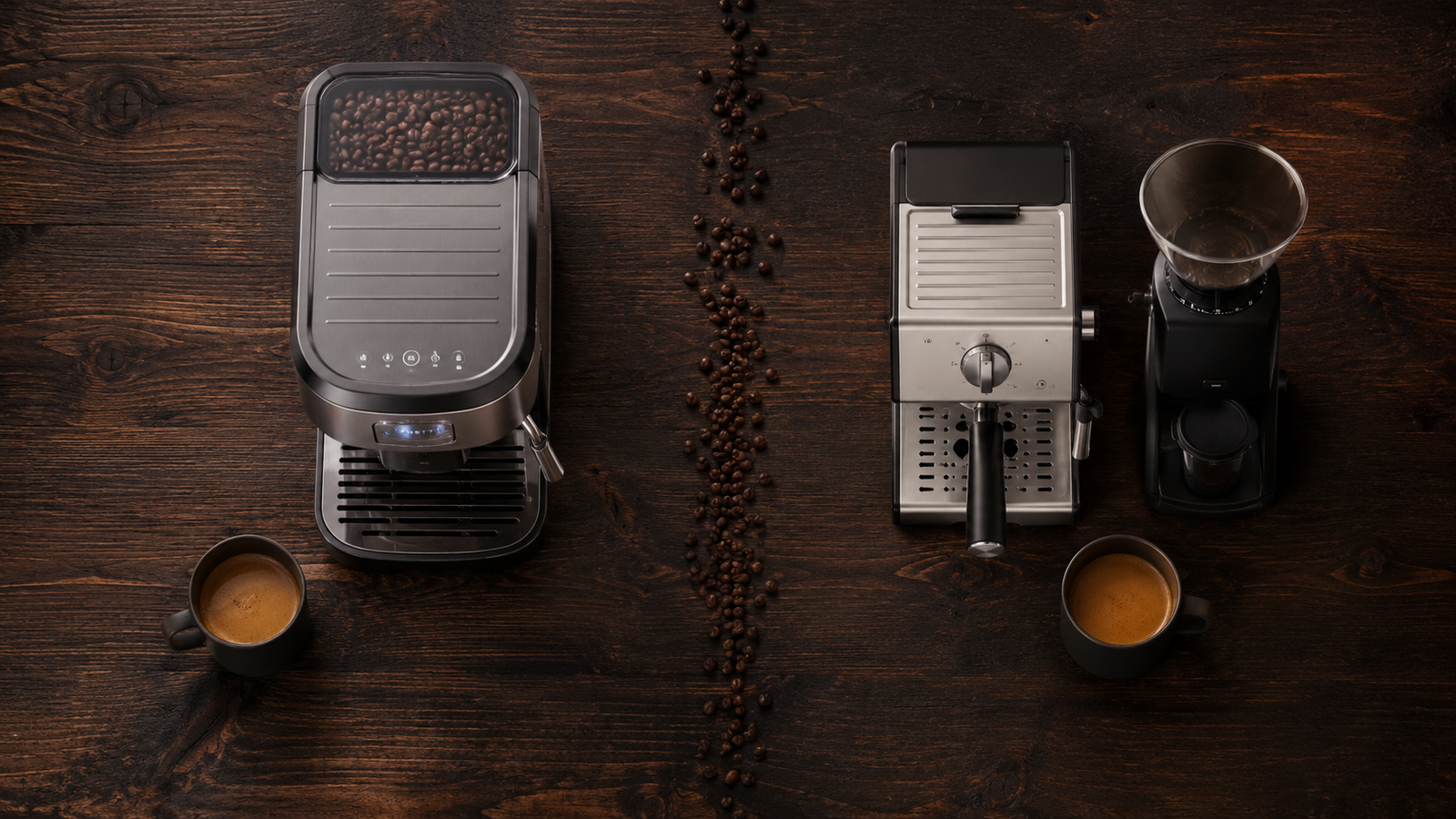
Road One: The All-in-One. A single machine like the Breville Barista Express bundles a built-in grinder with the espresso group head. One footprint, one purchase, one workflow.
This looks like the obvious answer to a beginner — and that’s where the trap sits. The pattern across discussions is striking: a remarkable number of Barista Express owners eventually post some version of “if I could do it over, I’d buy a Bambino Plus and a separate grinder.”
It’s not because the Barista Express is a bad machine — it isn’t. The integrated grinder simply ends up being the limiting factor on shot quality, and you can’t upgrade just the grinder later. It’s welded into the chassis.
Road Two: The Two-Component Setup. A compact entry-level espresso machine paired with a dedicated grinder, bought separately. Slightly more counter space. Two purchases instead of one.
But every component is upgradeable independently — when your skill outgrows the grinder, you replace just the grinder. When you want a more powerful boiler, you replace just the machine. As one community member framed it: “Separate components let you upgrade where you need it when you get the itch.”
For most buyers searching for the best home espresso machine under $500, road two wins on the math. The exception — and it’s a real one — is the buyer who genuinely cannot tolerate two devices on the counter, or who wants the absolute minimum learning curve.
For them, the all-in-one trade is honest. We’ll cover both paths below, starting with the combination most veterans wish they’d bought first.
Breville Bambino Plus + Baratza Encore ESP — The Combination Veterans Wish They’d Bought First
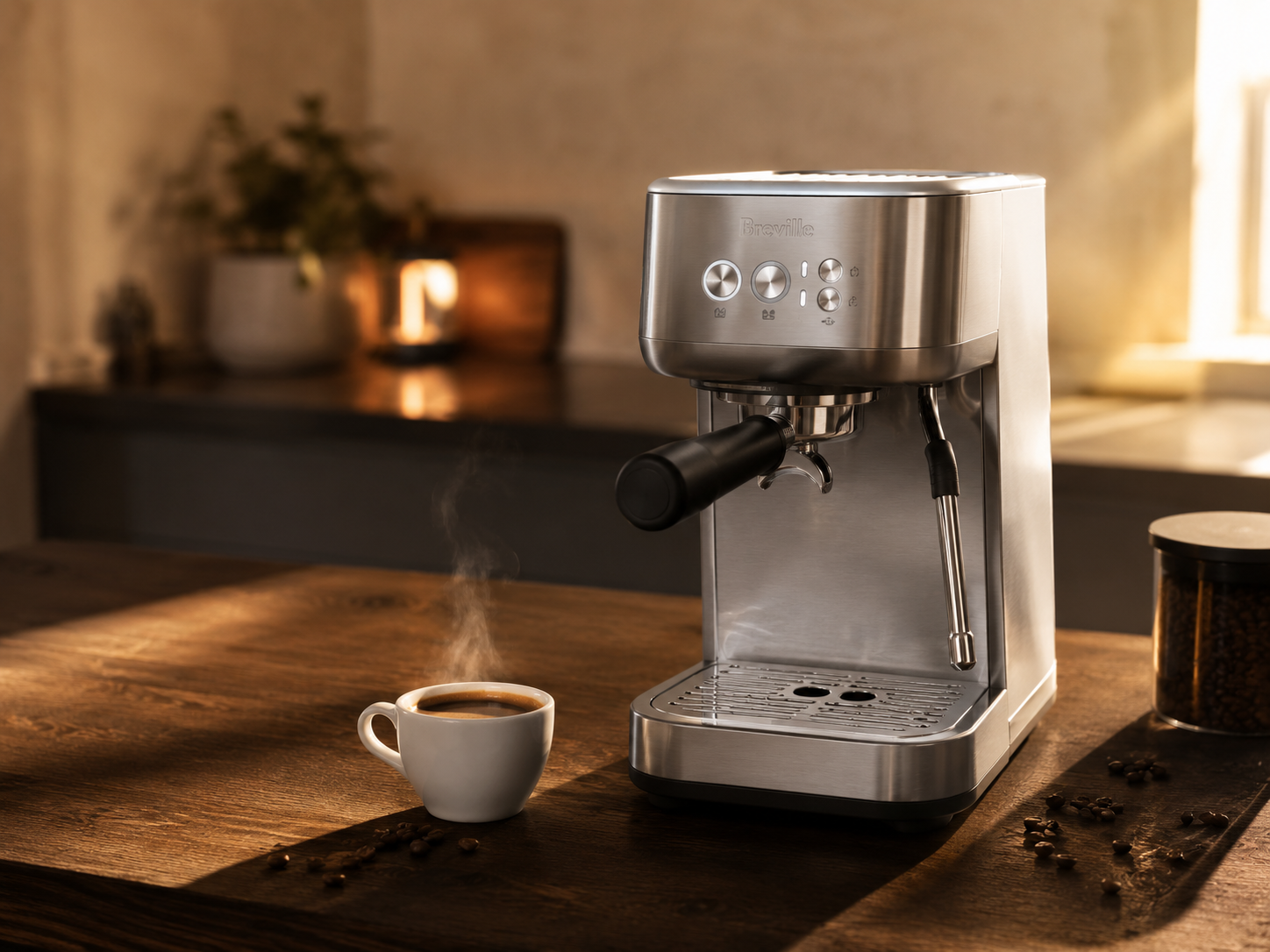
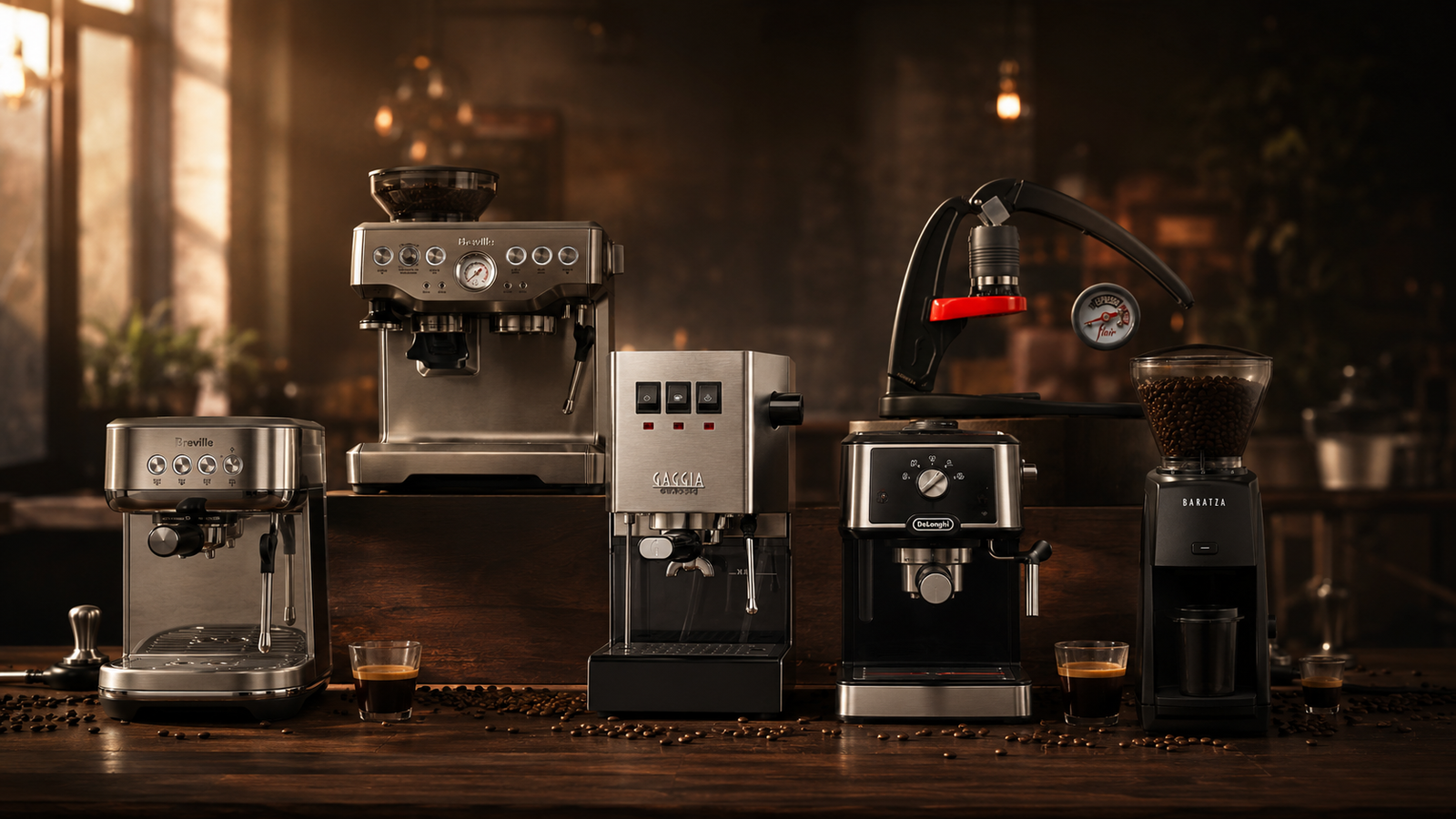
This pairing is the answer the community keeps writing in different words. It is, in our analysis, the best home espresso machine under $500 setup for most buyers — a compact machine that pulls café-quality shots when fed properly ground coffee, matched with an entry-level grinder specifically engineered for espresso.
The Bambino Plus heats up in roughly three seconds via Breville’s ThermoJet system, includes automatic milk texturing for the latte-and-cappuccino crowd, and has a footprint small enough that pairing it with a separate grinder still occupies less counter space than most all-in-one units.
The Baratza Encore ESP — Baratza’s first dedicated espresso-capable model in the entry tier — handles the part the Bambino Plus depends on but cannot do itself.
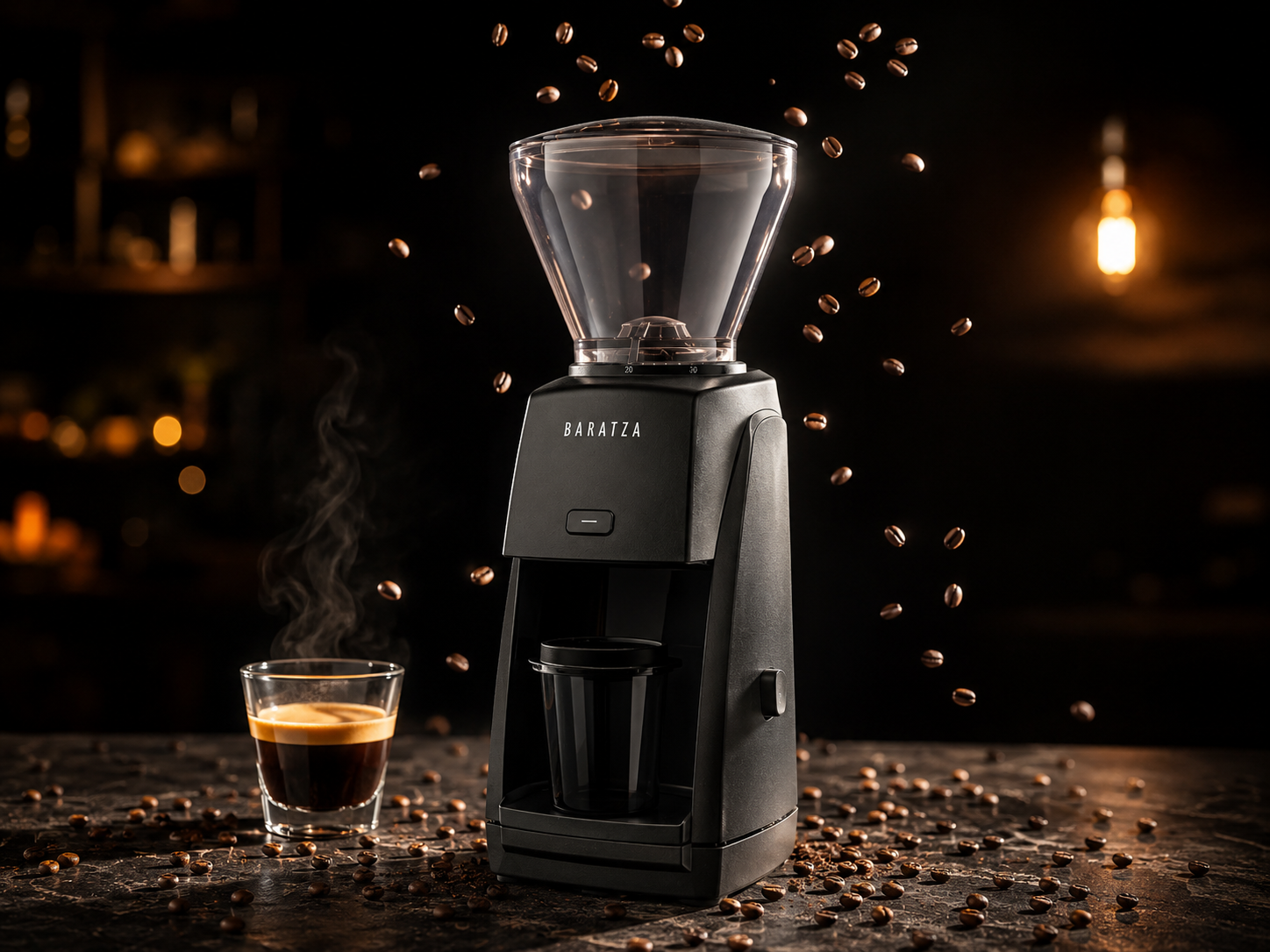
What makes this combination different from “Bambino plus any cheap grinder” is the ESP designation specifically. The Encore line existed for years as a drip-and-pour-over grinder; the ESP variant adds the finer adjustment range needed to actually hit espresso fineness — the exact range where channeling either happens or it doesn’t.
Underspending here is the most common rookie mistake the community calls out, and the ESP closes that gap at a price that fits a $500 total budget.
Reviewing the Five Machines That Make Up the $500 Decision
These five products represent the actual options the community keeps surfacing in $500 espresso threads. Here is how each one fits — or doesn’t fit — into the all-in-one-versus-separate question, and what each reveals about your real priorities.
Breville Barista Express — The All-in-One King, With an Asterisk
Brand Heritage: Breville is the Australian appliance brand that arguably created the modern home-espresso market with its prosumer-aimed lineup.The Barista Express delivers genuinely good espresso the day it arrives — but the integrated grinder is the ceiling, not the floor.
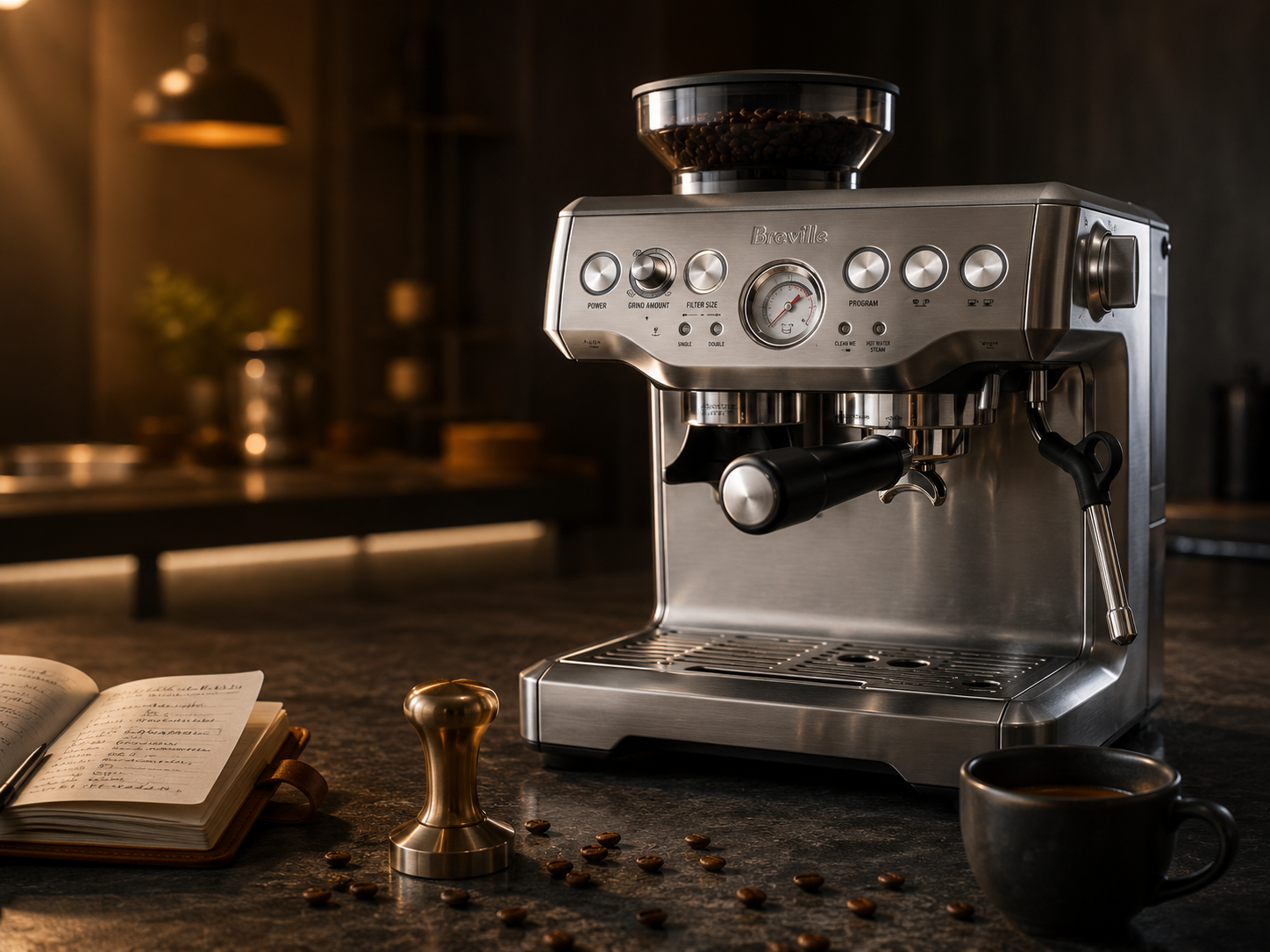
The Barista Express’s reputation is built on something real — a single machine that goes from countertop to first shot without a separate grinder purchase. But the discussion thread reveals a quieter pattern that almost no specification sheet captures.
Owners who later compare it to a Bambino-plus-separate-grinder setup at the same total cost overwhelmingly say they would have picked the separate components. Multiple owners in the thread explicitly described it that way.
One even shared a workaround — opening the machine and adjusting the internal burr from setting 6 to 5 to grind finer — which suggests the integrated grinder ships at a setting that limits some users out of the box.
The Barista Express is the right answer when single-footprint matters more to you than ceiling shot quality. Know which trade you’re making.
Where the Barista Express genuinely shines is workflow integration. Beans go in the top hopper, ground coffee dispenses directly into the portafilter, you tamp, you pull. There’s no transfer step, no second appliance to clean, no second power cord.
The pressure gauge on the front is genuinely useful for diagnosing extraction problems while you’re still learning. The steam wand is capable enough for café-style microfoam once you practice. The chassis is solid stainless steel that holds up to years of daily use.
The asterisk is the integrated grinder. It is not a bad grinder — it makes drinkable espresso out of the box. But it is also not a $200 dedicated burr grinder, and the difference shows up in the cup.
If your end goal is a daily latte that’s noticeably better than what a chain shop pours, the Barista Express clears that bar. If you’re aiming for shots that taste of the specific roastery’s specific beans, the integrated grinder will quietly cap how far you can go.
Pros
- One machine, one footprint, one workflow — no juggling devices
- Built-in pressure gauge helps beginners diagnose extraction issues
- Capable steam wand for genuine microfoam with practice
- Solid stainless steel build holds up to daily use
- Hidden internal burr adjustment lets advanced users go finer than the dial allows
Honest Cons
- Integrated grinder is the limiting factor for shot quality long-term
- Cannot upgrade just the grinder — it’s welded into the unit
- Learning curve is real despite the “all-in-one” framing
- Most owners surveyed in community threads say they’d buy a separate setup if redoing it
Gaggia Classic Pro E24 — The “Buy It For Life” Tank
Brand Heritage: Gaggia is the Italian company credited with inventing the modern lever-driven espresso machine in the 1940s; the Classic line has been a home-bar fixture for decades.A traditional single-boiler workhorse you can repair on your kitchen table — and that some users mod into something that punches at $2,000-machine quality.
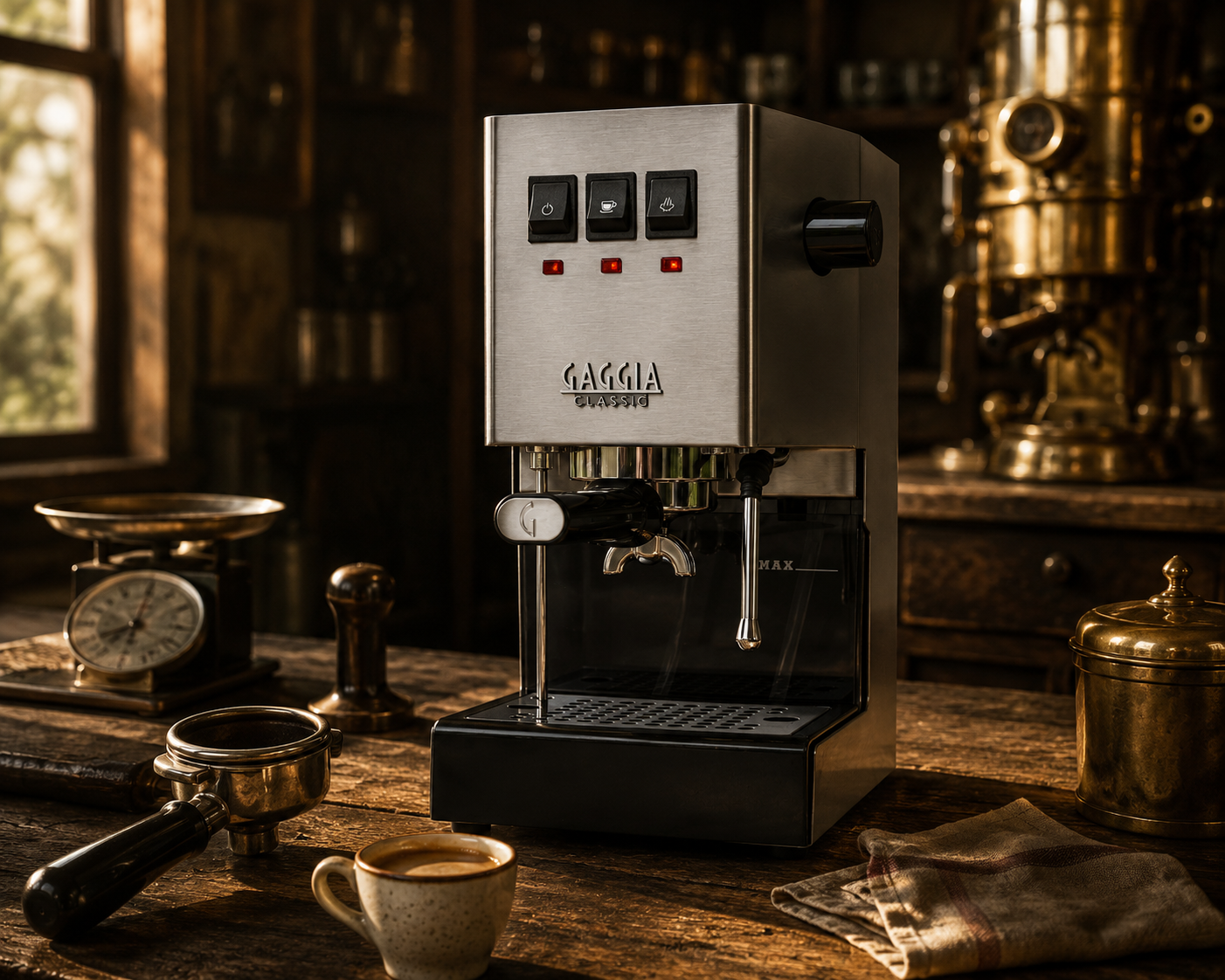
The Classic Pro doesn’t compete with the Bambino Plus on convenience — it competes on a totally different axis: longevity and modifiability.
Where the Bambino is built to be replaced in five to seven years, the Classic Pro is built to be repaired indefinitely. Inside the espresso community, an entire ecosystem of aftermarket modifications has formed around this exact machine — PID temperature controllers, pressure profiling kits, even open-source firmware projects (one community user mentioned modding theirs with “Gaggiamate within the year”).
What you’re really buying with the Classic Pro is not just a machine, but an upgrade path that doesn’t require buying a new machine. That’s a different value proposition than anything else in this guide.
Out of the box, the Classic Pro is a single-boiler, three-way solenoid machine with a commercial 58mm portafilter — the same size used in actual cafés, which means the entire universe of professional accessories fits it.
It does not have automation, a touchscreen, or auto-frothing. Every shot is fully manual: you control the timing, the pre-infusion (manually, by easing the lever), and the temperature surfing if you choose to bother. For the right buyer, this is exactly the appeal.
The trade-off worth saying clearly: this machine has a learning curve. The temperature management is something you have to actively manage, the steam wand is single-hole and requires technique, and dialing in a new bag of beans takes more attempts than it does on an automated machine.
One community member who recently bought one summed it up well — they were happy with it, but added that they planned to buy “a nice/expensive grinder one day.” That sequencing matters. The Classic Pro rewards a good grinder more dramatically than any other machine in this guide.
Pros
- Commercial 58mm portafilter — universal accessory compatibility
- Repairable for decades; entire community ecosystem of mods and parts
- Three-way solenoid produces dry, café-quality pucks
- Looks and feels like a small commercial machine, not a kitchen appliance
Honest Cons
- Steeper learning curve — no automation, manual temperature management
- No included grinder, no PID stock — modifications cost extra
- Single-boiler means you wait between brewing and steaming
- Single-hole steam wand requires technique for café-quality microfoam
De’Longhi ECP3420 — The Budget Underdog Veterans Quietly Respect
Brand Heritage: De’Longhi is the Italian appliance giant whose entry-level espresso line has trained more first-time home baristas than any other brand on the planet.The cheapest semi-automatic in this guide, but capable of genuinely good espresso once you swap the basket and accept the learning curve.
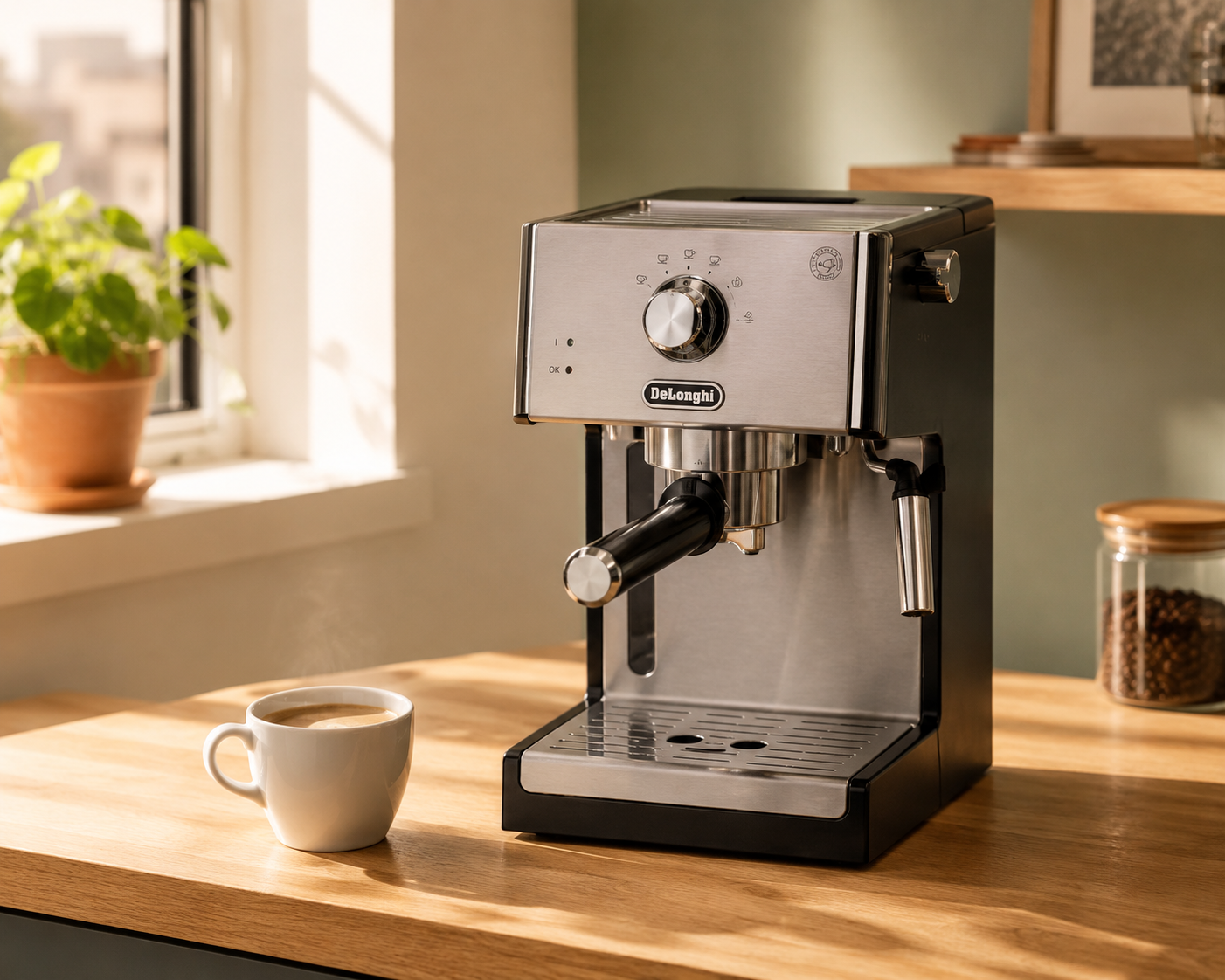
The ECP3420 has a reputation as a “starter machine you’ll outgrow” — and that’s half right. The other half, which the community discussion makes unusually clear, is different.
It produces shockingly good espresso once you replace the stock pressurized basket with an unpressurized one and add a proper portafilter. Multiple veterans recommend this exact path. One commenter who started on this machine said it “can be finicky but you can get great results out of it once you learn it.”
The honest framing isn’t “the cheapest decent machine” — it’s “the most modifiable budget machine,” because the upgrade path costs less than $30 in baskets and unlocks most of what an ECP3420 can do.
The buyer this fits is one who has $500 total and refuses to spend more than $200 on the machine itself, leaving $300 for the grinder where it matters more anyway.
Stock specs are modest: a 15-bar pump, a thermoblock heating element (faster heat-up than a boiler but less temperature stability), a swivel steam wand, and a 35-ounce removable water tank.
The build is plastic with stainless accents — it doesn’t pretend to be a Gaggia. What it does have is pressure capable of real espresso extraction, a portafilter the right size for community-standard accessories, and a price low enough that pairing it with a $300 grinder lands inside the $500 budget with breathing room.
The honest limitations: temperature stability is good-enough rather than great, the steam wand requires more patience than the Bambino Plus’s automated unit, and the included pressurized basket masks grind problems instead of letting you learn from them. The fix is the basket swap.
The buyer this serves is the one who actively wants the manual-craft learning curve at a low entry price, and who will spend the saved money on a real grinder.
Pros
- Lowest entry price among recommended semi-automatics
- 15-bar pump pulls real espresso when paired with a proper basket
- Leaves significant budget room for a quality grinder
- Compact footprint for small apartments
Honest Cons
- Stock pressurized basket hides grind issues — basket swap is essentially required
- Plastic build feels less premium than other options
- Steam wand is functional but requires more practice
- You will likely outgrow the machine within a few years if the hobby sticks
Flair Classic Espresso Maker — The Manual Lever Path
Brand Heritage: Flair is the U.S. brand that revived hand-lever espresso for the modern home barista, building a small but devoted following among purists and travelers.No pump, no boiler, no electricity — just you, a hand lever, and roughly nine bars of pressure when you do everything right.
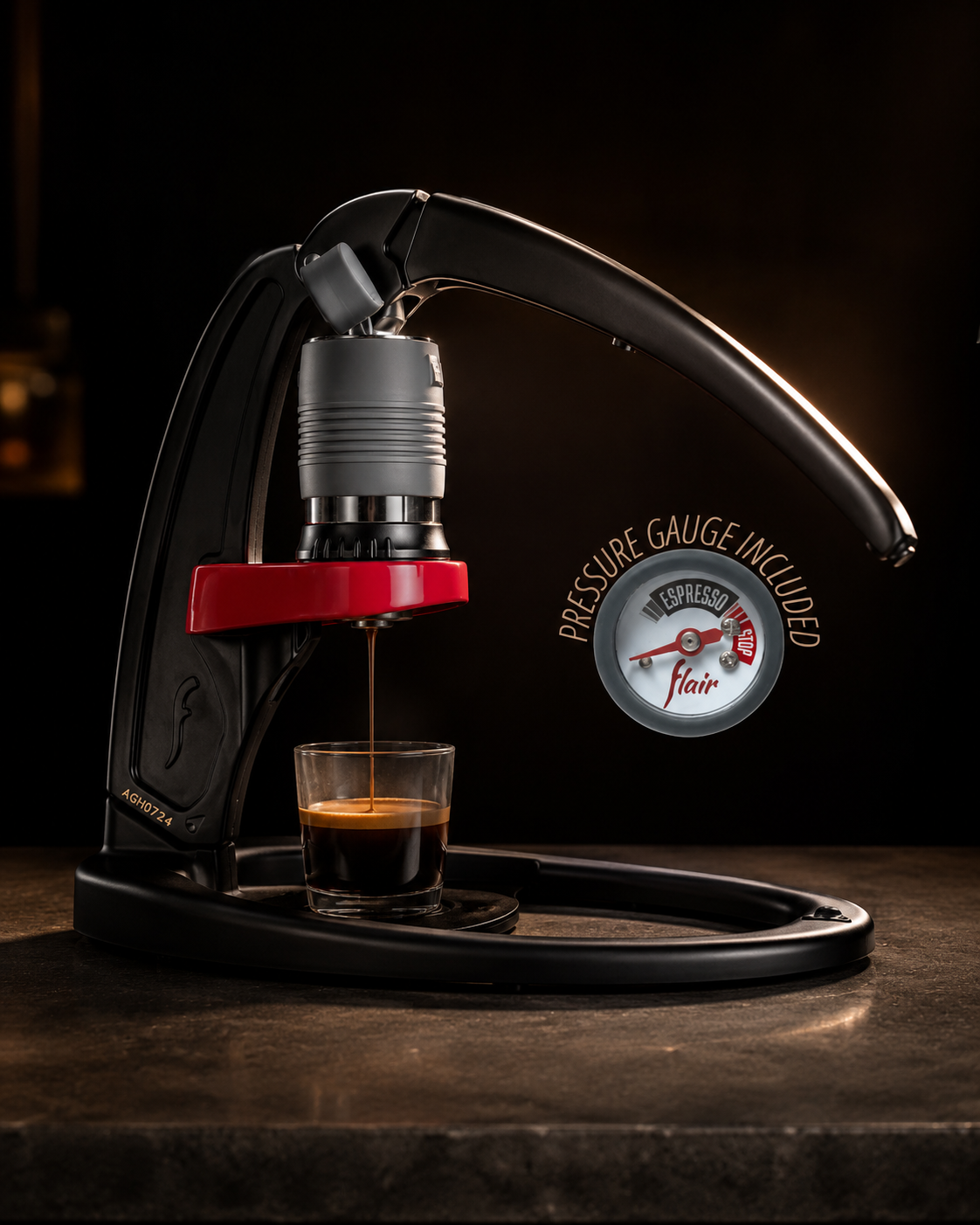
The Flair Classic is the option that exists outside the all-in-one-versus-separate dilemma the rest of this guide is built around. It doesn’t compete with the Bambino Plus or the Gaggia — it competes with the espresso bar itself.
What you’re paying for is not faster mornings or convenience. It’s the ability to control every variable manually, to feel the pressure curve under your hand, and to put a $150 device on the counter that produces the same shot as a $5,000 lever bar machine when fed the same beans through the same grinder.
The cost is workflow: this is not the machine for the morning when you’re running late. It’s the machine for the Saturday afternoon when the process itself is part of the point.
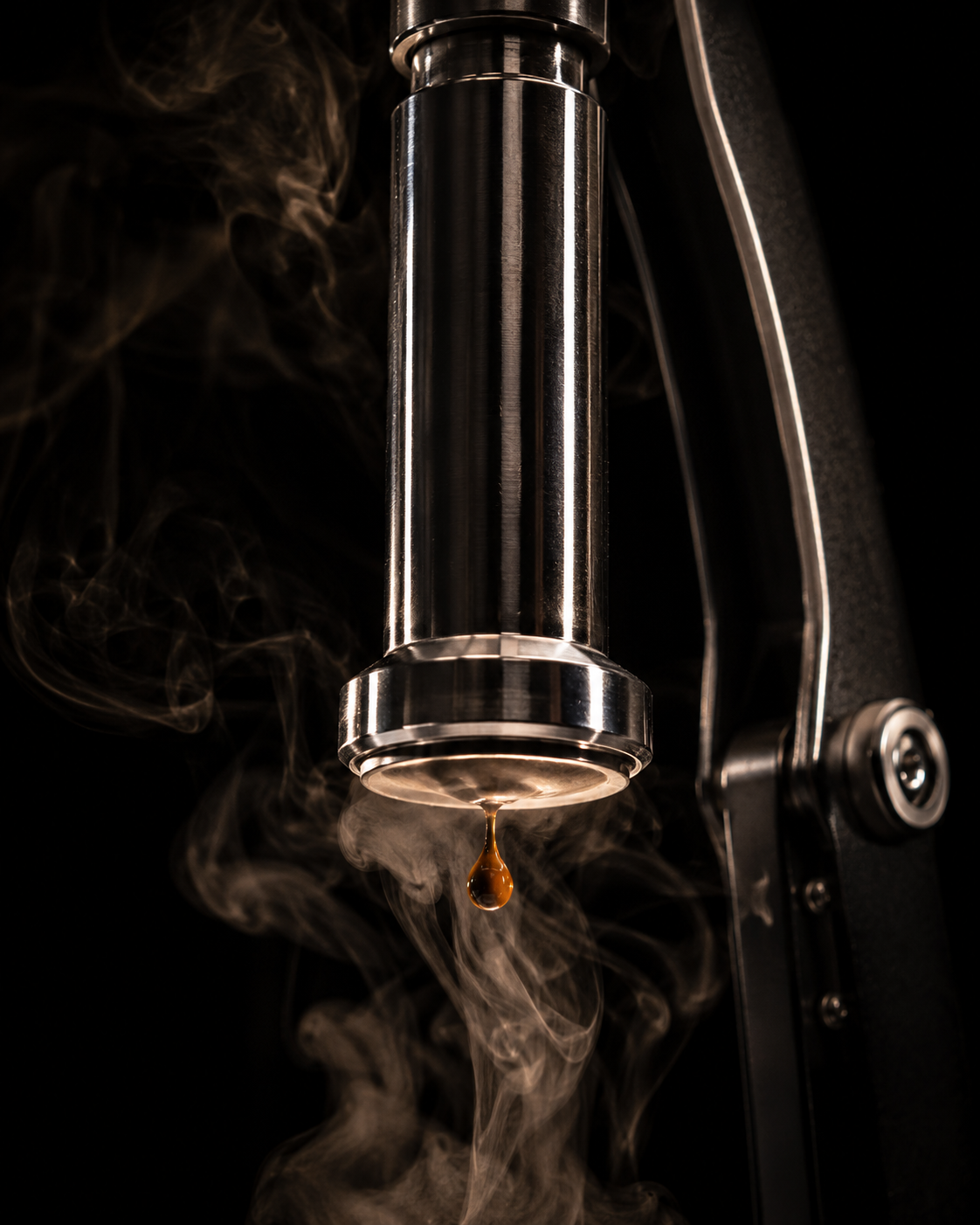
Mechanically, the Flair Classic is elegant in its simplicity. You preheat the brew chamber with hot water from a kettle, dose freshly ground coffee into the portafilter, lock it in, place the cylinder on top, fill it with hot water, and pull the lever down. Your arm is the pump.
Done correctly, the pressure gauge climbs into the espresso zone and you get a shot indistinguishable from a good café pull. Done incorrectly, you get a fast watery pour or a stalled choke. Both are excellent teachers.
The honest trade-offs are workflow trade-offs. There’s no automated milk frothing — you’ll need a separate milk frother or learn to froth manually with a French press if cappuccinos matter to you.
Each shot is a roughly two-minute process from kettle-on to shot-out. While that’s not slow by café standards, it’s slow by home-button-press standards. And you cannot pull two shots back-to-back the way an electric machine can — the lever process is one careful shot at a time.
Pros
- Total manual control — pressure, flow, and timing are all in your hand
- No electronics to fail; gaskets are inexpensive and user-replaceable
- Fully portable — works on a stovetop kettle anywhere in the world
- Punches at café-quality espresso at a fraction of typical machine cost
Honest Cons
- No built-in steam wand — milk drinks require a separate frother
- Slower workflow; not a “press button get espresso” machine
- Real learning curve — early shots will be inconsistent
- Requires hot water from a separate kettle for every pull
Baratza Encore ESP Grinder — The Hero of the $500 Setup
Brand Heritage: Baratza is the U.S.-based grinder specialist whose Encore line has been the default beginner recommendation in coffee communities for over a decade; the ESP variant adapts that legacy specifically for espresso.If the consensus from the discussion thread points to a single product to take seriously, this is it.
The original Baratza Encore is the most-recommended entry-level grinder in coffee communities — but its grind range was tuned for drip and pour-over, not espresso. Owners who tried using it for espresso ended up complaining that they couldn’t grind fine enough.
The ESP variant fixes exactly that. It adds a finer adjustment range specifically calibrated for the espresso fineness window, which is the variable the original Encore historically missed.
What this means in practice for your $500 budget: you don’t have to step up to a $400 grinder to hit espresso-grade consistency. The ESP closes the gap at an entry-tier price.
That’s exactly the math that makes the Bambino-Plus-and-grinder combo work financially. Without the ESP, the math collapses. With it, the whole separate-setup recommendation in this guide becomes affordable.
Specifications: 40 grind settings, conical steel burrs, an espresso-focused fine adjustment range, a small bean hopper, and a removable grounds bin that fits cleanly under the burr chute.
The motor is gentle on beans (low heat transfer, which preserves the volatile aromatics most aggressive grinders cook off). Baratza’s reputation for parts availability means the grinder is repairable rather than disposable. Replacement burrs, drive shafts, and gear assemblies are all stocked; this is not a “throw it out when it breaks” device.
The honest limitation: this is a single-dose-style entry grinder, not a commercial unit. Grind times are slower than a $500+ flat-burr grinder, retention is a few grams (not zero), and the bean hopper is small.
None of these matter for a home setup pulling a few shots a day. They start to matter only at high volumes — at which point the buyer has typically moved past the $500 starter-budget question this guide is built around.
Pros
- Espresso-calibrated fine adjustment — the missing piece in the original Encore
- 40 stepped grind settings cover espresso through French press
- Conical steel burrs preserve flavor better than blade or low-grade burr grinders
- Repairable design with strong parts availability
Honest Cons
- Slower grind times than premium flat-burr grinders
- A few grams of retention — not a zero-retention single-dose unit
- Stepped (not stepless) adjustment limits ultra-precise espresso dialing
- Will be the next upgrade if you go deep into the hobby
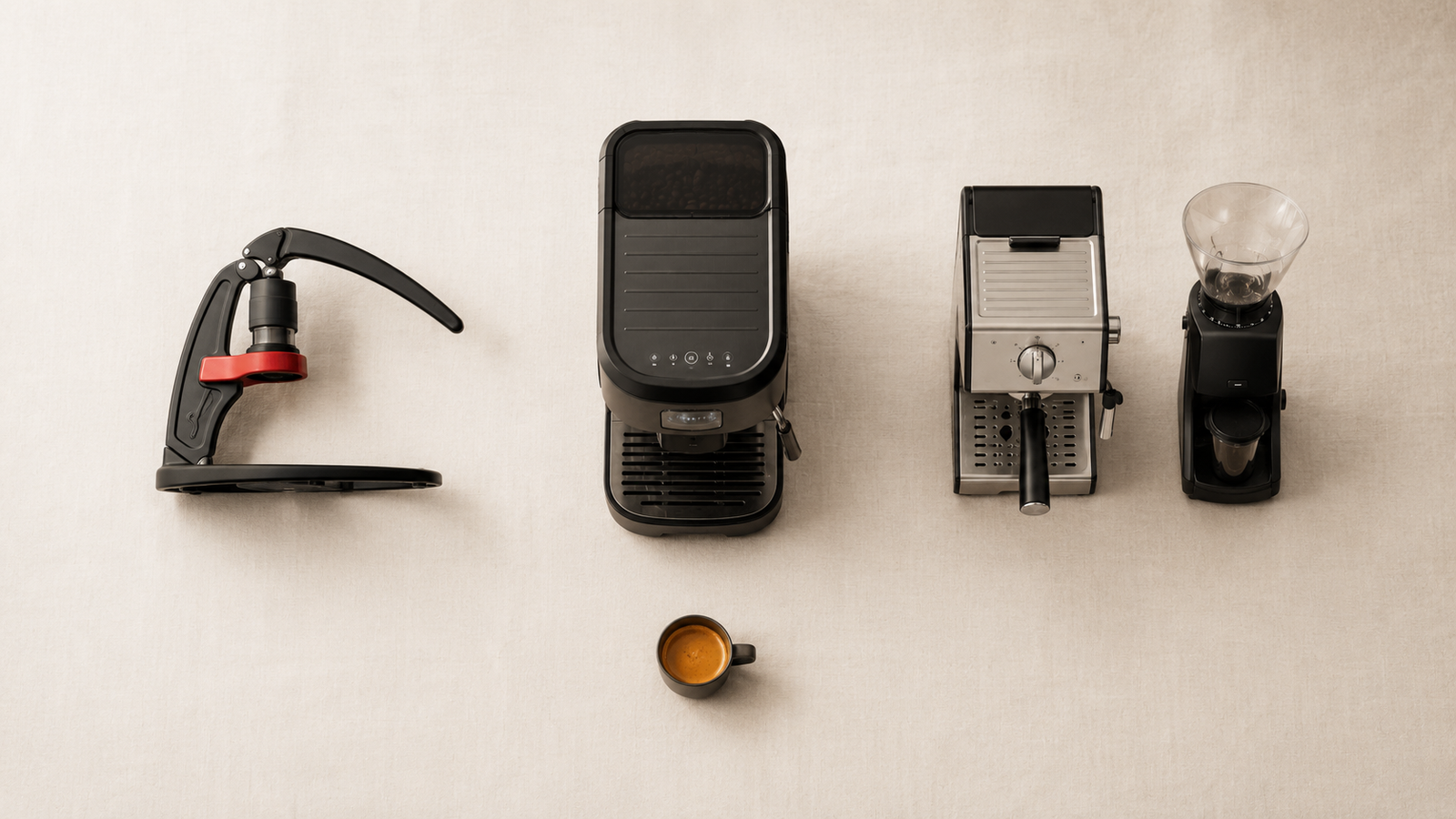
| Machine | Key Advantage | Best For | Get It |
|---|---|---|---|
| Breville Bambino PlusEditor’s pick · paired with Encore ESP | 3-second heat-up, automatic milk texturing, compact footprint | Buyers who want a separate-component setup with easy daily workflow | Check on Amazon |
| Baratza Encore ESPThe most-recommended single product | Espresso-calibrated fine adjustment in an entry-tier grinder | Anyone pairing the budget with a Bambino, ECP3420, Gaggia, or Flair | Check on Amazon |
| Breville Barista ExpressThe all-in-one option | True single-unit footprint with built-in grinder | Buyers who genuinely cannot accept two devices on the counter | Check on Amazon |
| Gaggia Classic Pro E24The buy-it-for-life path | Commercial portafilter, repairable for decades, full mod ecosystem | Buyers who want a forever machine, not a starter machine | Check on Amazon |
| De’Longhi ECP3420The budget underdog | Lowest entry price, leaves maximum budget for a serious grinder | $500-total buyers who refuse to overspend on the machine | Check on Amazon |
| Flair ClassicThe manual lever path | Fully manual lever — no electronics, total control, café-quality shots | Buyers who want craft and process over convenience and speed | Check on Amazon |
Home Espresso
What to Know
The questions most $500 buyers ask after reading dozens of community threads — answered honestly.
For most beginners with a $500 budget, the separate-component setup wins on the math. A capable compact machine like the Bambino Plus paired with the Baratza Encore ESP grinder consistently outperforms an all-in-one at the same total price.
The reason: all-in-ones in this tier compromise on the integrated grinder — and the grinder is the single biggest variable in shot quality. The community pattern is striking: a remarkable number of all-in-one owners later say they’d buy a separate setup if they could redo the decision.
The exception is the buyer who genuinely cannot fit two devices on the counter, in which case the Barista Express remains an honest pick.
You can — but the result is consistently described in community discussions as falling short of what a home setup is meant to deliver. There are two reasons.
First, pre-ground coffee starts losing its volatile aromatics within minutes of grinding, so by the time the bag reaches you, much of the flavor that distinguishes good espresso is already gone. Second, supermarket pre-ground is rarely fine enough to build proper extraction pressure, especially in a non-pressurized basket.
If your goal is “decent coffee that’s better than instant,” pre-ground works. If your goal is “real espresso comparable to a good café,” a freshly-ground setup is the floor, not the ceiling.
Honest answer: maybe not. One of the most useful comments in the community discussion was someone gently pointing out that a buyer asking for “espresso without any of the workflow” is probably looking for a super-automatic machine, not a semi-automatic.
Super-automatics handle the entire grind-dose-tamp-pull cycle behind a single button press. The trade is real — they don’t reach the ceiling that a good semi-automatic plus grinder can hit, and good super-automatics typically start above the $500 budget.
But if your honest priority is “press button, get coffee,” that category exists and is worth considering before forcing a manual workflow you won’t actually enjoy.